
Opening Preparation
The Complete Guide to Preparing a Digital Sports Venue Opening
Hands-on preparation for a digital sports venue from lease signing to opening day: a ninety-day backward schedule, how malls, sports parks, and tourism sites differ, rechecking ceiling height, floor loading, power capacity, and fire conditions, parallelizing permits and licensing, managing fit-out and MEP work, equipment delivery, installation, and commissioning, ticketing and membership system deployment with data initialization, hiring, training, and SOPs, opening pricing, presales, and the membership launch, an invitation-only soft-opening stress test, and the full rhythm of the grand opening and the first-month ramp-up.
The preparation phase is the only window in the entire life of a digital sports venue where you can still change things slowly: before opening, moving a circulation route is a matter of a few drawings; after opening, it means closure, demolition, and complaints. Unfortunately, most preparation accidents do not come from bad strategic decisions but from schedule misalignment—permits queued behind fit-out, equipment arriving before the floor has cured, staff showing up the day before opening. A single backward-planned schedule makes all of these problems visible in advance.
This guide unfolds in time order: build the master schedule backward first, then walk through how property types differ, the engineering recheck, the permit sequence, fit-out and MEP management, equipment delivery and commissioning, system deployment, team building, pricing and presales, the soft-opening stress test, and finally the grand opening and first-month ramp. The goal is exactly one: make opening day a rehearsed performance, not a first time on stage.

The 90-Day Countdown: Anchor the Schedule to Opening Day
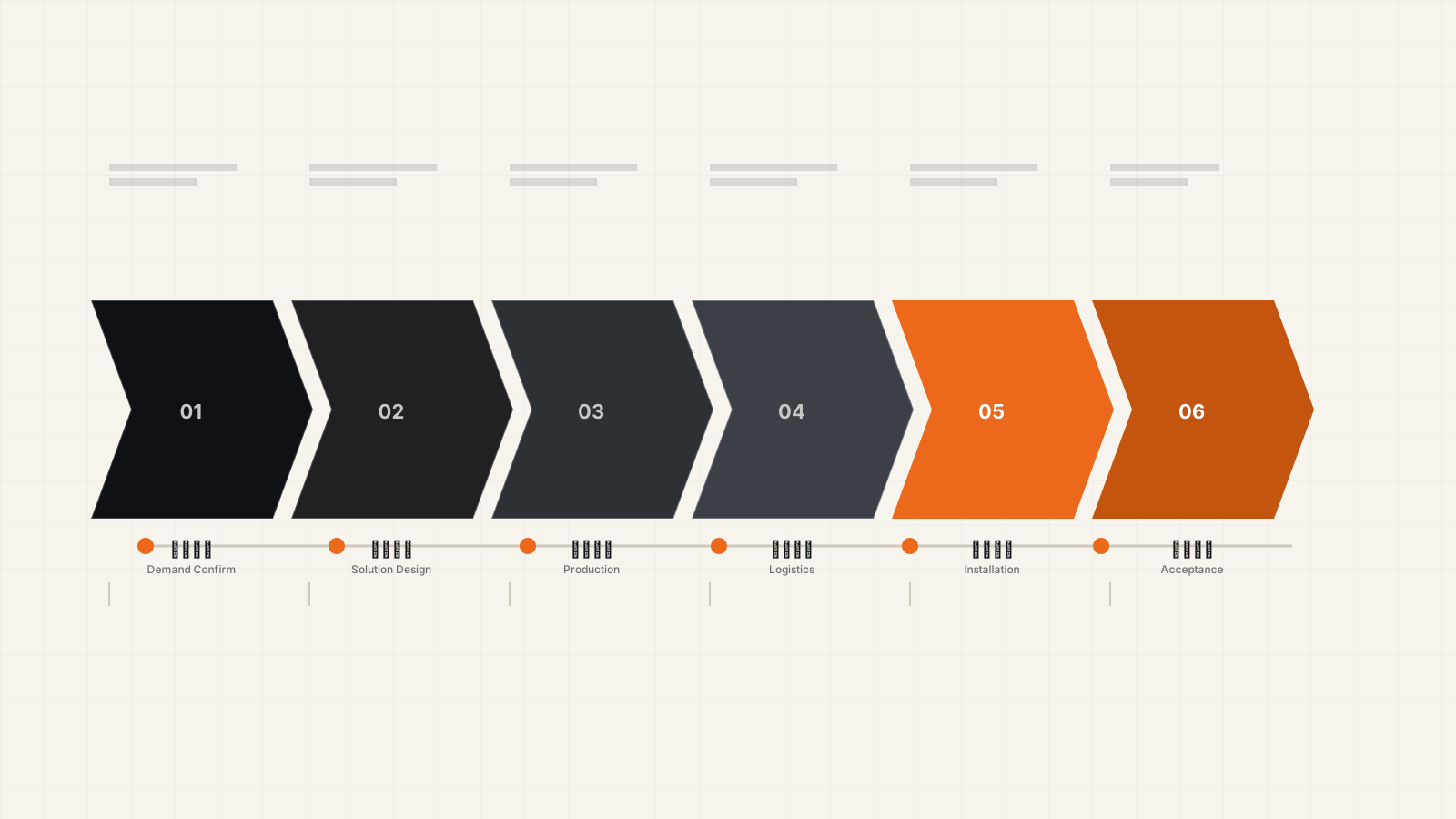
The most common scheduling mistake in venue preparation is **forward planning**—starting from the signing date and pushing everything downstream: permits after fit-out, hiring after equipment arrives. Every upstream delay then compresses the same two victims: training and the soft opening. The correct approach is **backward scheduling**: fix the opening date first (accounting for seasonality, holidays, and the landlord's event calendar), then derive the latest acceptable completion date for every milestone from that anchor. The moment the schedule is flipped, it becomes obvious which tasks must start first.
A ninety-day skeleton looks like this: **Days 1–15** for site due diligence, design development, and permit kickoff; **Days 16–50** for fit-out while equipment orders go into production; **Days 51–70** for equipment delivery and installation, system deployment, and the core team arriving on site; **Days 71–83** for full-team training, SOP drills, and the invitation-only soft opening; **Days 84–90** for closing out defects, the final presale push, and the grand opening. There are usually only two critical paths—the fire-approval chain and the production lead time of large custom equipment. Both must start earliest and be owned by a named person who watches nothing else.
Schedule management comes down to three things: **one master schedule** (milestones, owners, deliverables, and deadlines at a glance); **weekly meetings that review only variances** (talk about gaps, not progress, and assign a corrective action to every late item on the spot); and **buffers reserved for acceptance and commissioning** (fire re-inspection and equipment rework are the most common delay sources). In parallel, build the investment model in detail—rent and deposits, fit-out, equipment, staffing, working capital—and calibrate it repeatedly with the calculator. The schedule manages time; the model manages money. During preparation you cannot run without both.
- Schedule backward, not forward: set the opening date first, then derive every milestone deadline
- Two critical paths—fire approval and large-equipment production—start earliest
- One schedule for time, one financial model for money; weekly meetings track only variances
Property Types: A Mall Unit, a Sports Park, and a Tourism Site Are Not the Same Project
**A mall unit** is constrained by the mall's management system: construction is often restricted to overnight hours, materials must meet the mall's fire and hoarding standards, waste removal and freight elevators must be booked in advance, and opening events must fit the mall's unified calendar. In exchange you get a built-in traffic base and unified property management; the price is that every move requires prior approval. Reserve dedicated time in the schedule for mall approvals—drawing review, construction permits, fire-system integration acceptance—because any one of them can hold the opening date hostage.
**Sports parks and standalone buildings** offer far more engineering freedom, but you must verify municipal utilities item by item yourself: whether power capacity covers peak equipment load plus air conditioning, whether fire water supply and access lanes meet code, and whether parking and wayfinding can keep up with weekend crowds. Attached areas inside hotels and resorts carry another kind of constraint: operating hours, guest circulation, and noise control must be compatible with hotel operations, and neither construction nor opening may disturb staying guests.
**Cultural-tourism projects** are strongly seasonal, so the opening date must be backward-planned to land before the peak season—it is better to compress preparation than to miss the window. Venues with an education-and-training component face additional licensing and safety requirements. The conclusion is simple: **the property type determines the difficulty structure of preparation before you ever sign**. Pricing that difference into the preparation plan is far cheaper than fixing it after signing.
- Mall units: long approval chains; drawing review and construction permits get dedicated time
- Standalone and sports-park sites: verify power capacity, fire water, parking, and wayfinding item by item
- Tourism projects backward-plan from peak season; education components carry extra requirements
Engineering Due Diligence: Ceiling Height, Floor Loading, Power, and Fire Conditions Come First
The first move after receiving the floor plan is to **recheck engineering conditions against the equipment list**. Ceiling height: some large simulators have explicit clear-height requirements, so measure under beams and below the finished ceiling line. Floor loading: have a structural engineer confirm slab capacity in zones where large equipment clusters and where crowds gather. Power: total the peak draw of equipment plus air conditioning, lighting, and any F&B area to decide whether a capacity upgrade is needed. Network: scoring, turnstile validation, and surveillance all depend on stable cabling and a properly located equipment room.
**Fire conditions are the top priority of the recheck**: the number and width of evacuation routes, compartmentation, whether sprinklers and smoke detectors need modification, and the approval path for the second fit-out. Fire retrofit is the most common budget overrun of the preparation phase—many sites "look openable" but in fact need sprinklers relocated, exit doors added, and materials upgraded to fire-rated versions. The earlier the recheck, the more leverage you have: before signing, these costs are negotiating conditions; after signing, they are your invoice.
Put **everything agreed with the landlord in writing**: the delivery standard with dated photos of existing conditions, the start and end of the rent-free fit-out period, responsibility for construction permits and waste removal, rights to the facade and advertising positions, and limits on operating hours and noise. Verbal promises are worthless during preparation—the person you deal with three months later may not be the same one. The recheck checklist, meeting minutes, and supplementary agreements together form the engineering paper trail of the whole preparation phase.
- Recheck ceiling height, loading, power, and network against the equipment list; surface structural issues early
- Fire retrofits are the most common overrun: checked before signing they are leverage, after signing they are your bill
- Delivery standard, rent-free period, advertising rights, operating hours—all in writing
Permits and Licensing: Parallelize Everything You Can
Confirm the permit list item by item against local requirements. Common items include the **business license** (with a scope covering sports entertainment or amusement operations), **fire acceptance or filing**, the **public-place hygiene permit**, the **food service permit** (if you sell food and beverages), and culture-related filings required in some regions. The list itself is not complicated; what is complicated is the sequence and the dependencies between items.
The working principle is **parallelize everything that can be parallelized**: company registration starts in sync with fit-out design; fire drawing review is submitted as soon as construction drawings are frozen, without waiting for work to begin on site; tax, banking, and social-insurance accounts move forward together with the business license. The only hard serial link is fire acceptance, which sits after fit-out completion—and that is exactly why fire review must be submitted earliest while acceptance serves as the final backstop, with buffers reserved in the schedule for re-inspection and rectification.
**Compliance is not a one-off task before opening**. Templates for daily safety inspection logs, equipment maintenance ledgers, and emergency plans with drill records should be built during preparation so the venue operates in a compliant state from day one. Local interpretations of new business formats vary widely; for anything uncertain, consult the local authority or a professional licensing agency in advance—it is far cheaper than being ordered to rectify after opening.
- List first: confirm license, fire, hygiene, and food-service requirements against local rules item by item
- Parallelize, never serialize: registration runs with design; fire review does not wait
- Build the compliance documents during preparation: inspections, maintenance ledgers, emergency plans
Fit-Out and MEP Construction: Equipment First, Hidden Works on Record
Fit-out follows the **equipment-first** principle: construction drawings are produced only after the equipment list and the point-layout drawing are frozen, and power circuits, network points, floor reinforcement, and equipment foundations are all built to equipment requirements. Reverse the order—fit out first, choose equipment later—and rework is almost guaranteed: re-drilled openings, re-pulled circuits, abandoned points, each one real money wasted.
Construction management focuses on three things. **Hidden-works acceptance**: photograph every water, power, and fire line item by item before panels are closed; those photos are the only map for future repairs. **Acoustic treatment**: reverberation and impact noise affect both the in-venue experience and the neighbors, so wall absorption, floor cushioning, and equipment anti-vibration pads must be done right the first time during hard fit-out. **Layered lighting**: base lighting for safety, ambient lighting for atmosphere, and illuminance in equipment zones for experience—three separately controlled circuits.
Final acceptance walks the checklist item by item: whether circulation was built as designed, evacuation signage and emergency lighting, accessibility, restroom and locker provisions, and the MEP points at the cashier counter and bar. Failed items go onto a **rectification list with deadlines and a closed loop**—do not bring equipment in with open issues. Changing hard fit-out after equipment arrives doubles both cost and schedule.
- Equipment first: construction drawings only after the point layout is frozen; circuits and loading built to equipment needs
- Three focuses: hidden works on record, acoustics done right once, lighting in three separately controlled layers
- Walk the acceptance checklist item by item; bring equipment in only after rectifications close
Equipment Delivery and Commissioning: Zone-by-Zone Acceptance, Issues Graded
Order timing is **back-calculated from production and shipping lead times**; large custom equipment usually has the longest cycle and must be locked in earliest. Before delivery, confirm site logistics: clear dimensions of doorways and corridors, freight-elevator capacity, unloading and staging areas, the inbound route, and floor protection. Many "it will not fit" problems can be found in advance with a tape measure and the elevator specification sheet.
Installation and commissioning use **zone-by-zone acceptance**: as each zone is completed, run power-on tests, safety-interlock tests, scoring and networking tests, and continuous-run stability tests. Grade every issue found—**anything that affects safety takes the unit out of service immediately**, with no room for negotiation; experience issues are logged and scheduled by priority. The advantage of zoned acceptance is that commissioning and deep cleaning can run in parallel instead of competing for the same window.
Build the **equipment archive** during commissioning: serial numbers, warranty periods and coverage, consumables lists, recommended maintenance cycles, and supplier after-sales contacts. The archive lives in the management system, not in a drawer—after opening, inspections and servicing follow the maintenance calendar, which is far more efficient than digging out contracts and phone numbers when something breaks.
- Order dates back-calculated from production cycles; check doorways, elevators, and unloading conditions before delivery
- Four tests per zone: power-on, safety interlock, scoring and networking, continuous-run stability
- Grade issues: safety means immediate shutdown; experience issues go on the improvement plan; the equipment archive lives in the system
System Deployment and Data Initialization: Run the Full Flow Before Opening
Ticketing, membership, products, price lists, staff accounts, and permissions—**all base data goes into the system before opening**, and the full flow is rehearsed end to end: online purchase, on-site validation, stored-value top-up, session-card deduction, refunds and card cancellations, and the same-day operating report. The goal of deployment is not "it is installed"; it is that any employee, at any terminal, can complete every operation by the book.
The Sport Ants **smart venue management system (¥58,000)** ships with five modules—ticketing, membership, tournaments, points, and analytics—and is deployed in one pass during preparation: price lists and ticket types, membership tiers and benefits, points rules, and staff roles are all configured, while turnstiles, scanners, receipt printers, and big screens are integrated and tested one by one. On opening day the front desk simply follows the process; nobody learns the system in front of customers.
Do not skip three things in data initialization: **hardware stress testing** (turnstiles and scanners under peak concurrency), an **offline contingency flow** (offline validation and the backfill rules once connectivity returns), and a **manual fallback plan for opening day** (backup tickets and paper registration forms). Systems exist to reduce errors, but the opening plan must assume surprises will happen—a system with a fallback is the only reliable one.
- All base data in the system before opening; run purchase, validation, top-up, and refund flows end to end
- Five modules deployed in one pass: ticketing, membership, tournaments, points, analytics
- Three safeguards: peak-concurrency testing, offline contingency, and a manual fallback plan
Hiring and Training: No Shift Before Passing the Assessment
Staffing follows **one person per post, plus reinforcement at peak**: general manager, front-desk ticketing, equipment hosts, safety patrol, and cleaning, with a floater post added for opening-period crowds. Hiring has a rhythm: **the general manager arrives earliest**—joining mid-preparation to learn the equipment, circulation, and suppliers, because they will be the overall coordinator on opening day. Frontline staff arrive three to four weeks before opening, leaving enough time for training and team break-in.
Training runs in three stages. **Rules and safety red lines first**: age and height limits for each attraction, prohibited behaviors, and emergency-response procedures—the prerequisite for taking any shift. **Equipment operation and common faults**: every employee can perform basic operations and resets and handle frequent minor faults without waiting for a technician. **Service flow and scripts**: standard moves for greeting, card sales, guidance, and complaint handling. Training ends with an assessment, and **only those who pass take shifts**, with records kept on file—this protects both service quality and the safety-responsibility evidence chain.
The first version of the SOP is written during preparation: opening and closing procedures, hourly inspection sheets, equipment checklists, emergency plans, and graded complaint handling. Version one is never perfect, and the soft opening is its field test—flows that do not run and handoffs that do not connect get fixed before opening. The goal of team building is not a full roster; it is that every person knows what they should be doing every hour.
- Hire in rhythm: the general manager arrives mid-preparation, frontline staff a month before opening
- Three-stage training: safety red lines, equipment operation, service scripts; pass the assessment to take a shift
- Write the SOP first version during preparation, test it in the soft opening, fix it before opening
Pricing, Presale, and the Membership Launch: Revenue Before Opening
The price architecture is finalized before opening: single-entry tickets, timed tickets, session cards, monthly, quarterly, and annual passes, and family bundles—aligned with nearby competitors and your own cost structure. One key decision is **the relationship between the opening price and the standard price**: opening specials must be explicitly time- and quantity-limited, otherwise the opening price becomes a permanent anchor in customers' minds, and every return to standard pricing will read as a price increase.
**Presale is the dual engine of cash and footfall during preparation**. A limited run of founding-member cards, sold through fixed channels with benefits written in black and white (validity, transfer rules, refund and change terms), is the most direct way to test the market during preparation: if presale does not move, positioning or traffic is wrong and there is still time to adjust; presale data also feeds opening-day traffic forecasts and shift planning.
The membership system **launches with points and tiers from day one**: registration, spending, referrals, and tournament participation all earn points, redeemable for play time and merchandise. Opening-period event formats—challenge leaderboards, king-of-the-hill matches, family quests—go live at the same time, giving the first wave of guests an explicit reason to come back. Opening buzz is temporary; the member assets that settle out of it are the real prize of opening marketing.
- Make opening prices explicitly time- and quantity-limited; never let a special become a permanent anchor
- Founding-member presale: limited, fixed channels, transparent terms; the data feeds shift planning
- Launch points, tiers, and event formats on day one; give guests a reason to return
The Soft-Opening Stress Test: Invitation Only, No Issue Survives the Night
Run one to two weeks of **invitation-only soft opening** before the official launch: a staff friends-and-family session, a presale-member session, and a local media and creator session in separate batches. The purpose of the soft opening is not revenue; it is to stress equipment, processes, and people under real footfall—empty-venue testing can never reveal what happens at the front desk when thirty children arrive at once.
The stress test watches three categories of issues. **Equipment**: failure rates, reset times, and queue lengths at high-frequency attractions. **Process**: validation bottlenecks, F&B serving speed, locker and changing-room pinch points. **Staffing**: broken handoffs between posts, emergency response speed, and script consistency at peak. Hold a debrief at the end of every day and assign a countermeasure to every issue the same day—**no issue survives the night** is the only discipline of the soft opening.
During the soft opening, fit-out and equipment suppliers stay **on site or on rapid response**—this clause belongs in the procurement and construction contracts, because arranging it ad hoc means waiting passively. Before the official opening, every must-fix issue is cleared to zero, and can-optimize items go onto the post-opening iteration list. Opening with a clear issue list and opening on luck are two completely different starting positions.
- One to two weeks of invitation-only sessions: friends and family, presale members, media and creators
- Watch equipment, process, and staffing issues; debrief daily and let no issue survive the night
- Put supplier on-site clauses in the contracts; clear every must-fix item before opening
Grand Opening and the First-Month Ramp: Hype Fades, Members Are the Base
Opening week is a **combined punch**: opening specials and door gifts create the reason to come, challenge events and king-of-the-hill matches create the talking points, concentrated local influencer visits and short-video placement create the volume, and cross-industry partnerships—mutual promotion with neighboring merchants, invitations to schools and communities, debut team-building sessions for companies—create incremental traffic. Every move points at the same target: making opening week a small event in the local life circle.
**Start collecting data on day one**: traffic by time slot, ticket-type mix, utilization of each attraction, the share of secondary spending, and presale-member show-up conversion. The management system's reports run from the first day, and the first month is reviewed weekly: push exposure behind the ticket type that sells, adjust guidance for idle equipment, and fill dead time slots with events. Marketing and operations follow the data, not the gut.
Hold sober expectations for the first month: **the opening spike always fades**, and the real test is weekday traffic in weeks three and four. Prepare the responses in advance—activate the members acquired during opening (visit reminders, points campaigns, themed tournaments), launch the team-building and private-booking line in parallel, and treat review-platform reputation as a daily task. The grand opening decides how high you start; the first-month ramp decides how steadily you run.
- The opening combo: specials create reasons, events create topics, influencer visits create reach, partnerships create new traffic
- Data runs from day one: ticket mix, equipment utilization, secondary spend share, weekly reviews
- The fade is certain: run member reactivation and private bookings in parallel to stabilize weekdays
FAQ
How long does it usually take from signing to opening?
It depends on floor area, fit-out complexity, and the pace of fire approval; two to four months is common. The real critical path has only two links: the fire-approval chain and the production and shipping lead time of large equipment. Backward-planning from the opening date and starting these two chains earliest works far better than chasing them later. Larger projects or those involving structural work should add buffer on top.
Should permits come before fit-out?
Run them in parallel; never wait serially. Company registration starts together with fit-out design, fire drawing review is submitted as soon as construction drawings are frozen, and tax and bank accounts move with the license. The only hard serial link is fire acceptance after fit-out completion, so keep buffers in the schedule for re-inspection and rectification. Treating permits as a serial queue is the most common scheduling mistake of the preparation phase.
When should equipment be ordered?
Back-calculate the order date from production and shipping lead times. Large custom equipment has the longest cycle and is locked in earliest, usually before the middle of the fit-out period. Time delivery to avoid the wet-work stage of fit-out, and before arrival confirm doorway and corridor clear dimensions, freight-elevator capacity, and unloading and staging areas. Equipment arriving too early has nowhere to sit; arriving too late it compresses commissioning. Both mistakes come from not scheduling backward.
Should the soft opening charge admission?
Invitation-only plus a discounted price is recommended; neither fully free nor full price. Free admission makes crowd quality uncontrollable and distorts feedback; full price raises customer expectations and lowers their tolerance. A discounted price paired with a feedback questionnaire is the balanced approach—guests who paid take the experience seriously, and the operator gets honest opinions. The soft opening exists for stress testing, not revenue; do not lose that positioning.
How do you run an opening presale without losing money?
Four principles: limited quantity (a clear cap on founding cards; scarcity is the selling point), limited time (an explicit deadline), limited channels (fixed sales channels simplify tracking and prevent fraud), and transparent benefits (validity, transfer, refund, and change terms in writing). Presale revenue can cover final preparation payments, but never back-calculate discount depth from a presale target—once the discount breaks the cost line, every member acquired becomes a burden after opening.
Which items overrun the budget most often during preparation?
Four frequent offenders: fire retrofits (sprinklers, evacuation, fire-rated materials), power-capacity upgrades (when capacity falls short, both cost and schedule become uncontrollable), acoustic treatment (retrofitting after complaints costs far more than doing it right the first time), and rush work (overtime and rework from compressing the schedule). The finer the pre-signing engineering recheck, the fewer the overruns; holding roughly ten percent of the budget as contingency is common industry practice.
When should hiring start?
In two waves: the general manager joins mid-preparation and takes part in equipment delivery, circulation confirmation, and supplier coordination—they are the overall coordinator on opening day. Frontline staff arrive three to four weeks before opening and complete the three-stage training—rules and safety, equipment operation, service flow—plus a passing assessment. Scrambling to fill the roster days before opening is a classic failure mode: a team without training and break-in exposes every problem in front of customers.
What if fire acceptance fails?
Rectify item by item according to the correction notice and apply for re-inspection—this is the only path. You may not open without a passing result; there is no gray zone. Risk reduction happens upstream: have a professional fire consultant pre-review the fit-out drawings once they are frozen, so sprinkler, evacuation, and compartmentation issues die at the drawing stage; and keep schedule buffers for rectification and re-inspection so acceptance does not collide with the opening date.
How long should opening promotions run?
One to two weeks of concentrated launch activity is right; then shift into normal operating rhythm. Overly long opening promotions turn the opening price into a permanent price anchor and keep the team in an abnormal state. What matters more than extending the campaign is retention: activate the members registered during opening, maintain review-platform reputation, and turn tournaments and points mechanics into weekly fixtures—this is how opening heat becomes an operating base.




CONTACT
Preparing a digital sports venue?
Tell us about your site conditions, target audience, and budget to get one-stop support from preparation scheduling to equipment selection and system deployment.
2026-11-11