
Tournaments & Membership
Digital Sports Venue Tournament Operations and Membership Loyalty Guide
How digital sports venues use tournaments, points and community to drive repeat visits: starting from the positioning of “a tournament is a product”, it covers the tiered design of daily and monthly events, the full flow of sign-up, grouping, scoring and awards, membership tiers and benefit pricing, the earn–burn–redeem points loop, the interplay between tournaments and points, community operating methods, five core metrics, common failure causes, how to roll out the five modules of the management system, and an annual operating calendar.
Equipment decides what brings a customer in the first time; tournaments and membership decide whether there is a second time. The competitive nature of digital sports venues makes them natural homes for competition — ping pong, tennis, basketball, darts, football leagues: every competitive social layer unit is a stage for a match. But at most venues the tournament stops at “one lively opening event” and never becomes a reusable operating mechanism.
This guide treats tournaments, points and community as three meshing gears. Tournaments are the product — they give customers a concrete reason to come back. Points are the currency — they turn every in-venue spend into a prepayment for the next visit. Community is the reservoir — a place where tournament news, points benefits and competitive drive keep fermenting. How to design the three gears, how to make them mesh, which metrics to test them with, and the pitfalls that catch most operators — taken one at a time.
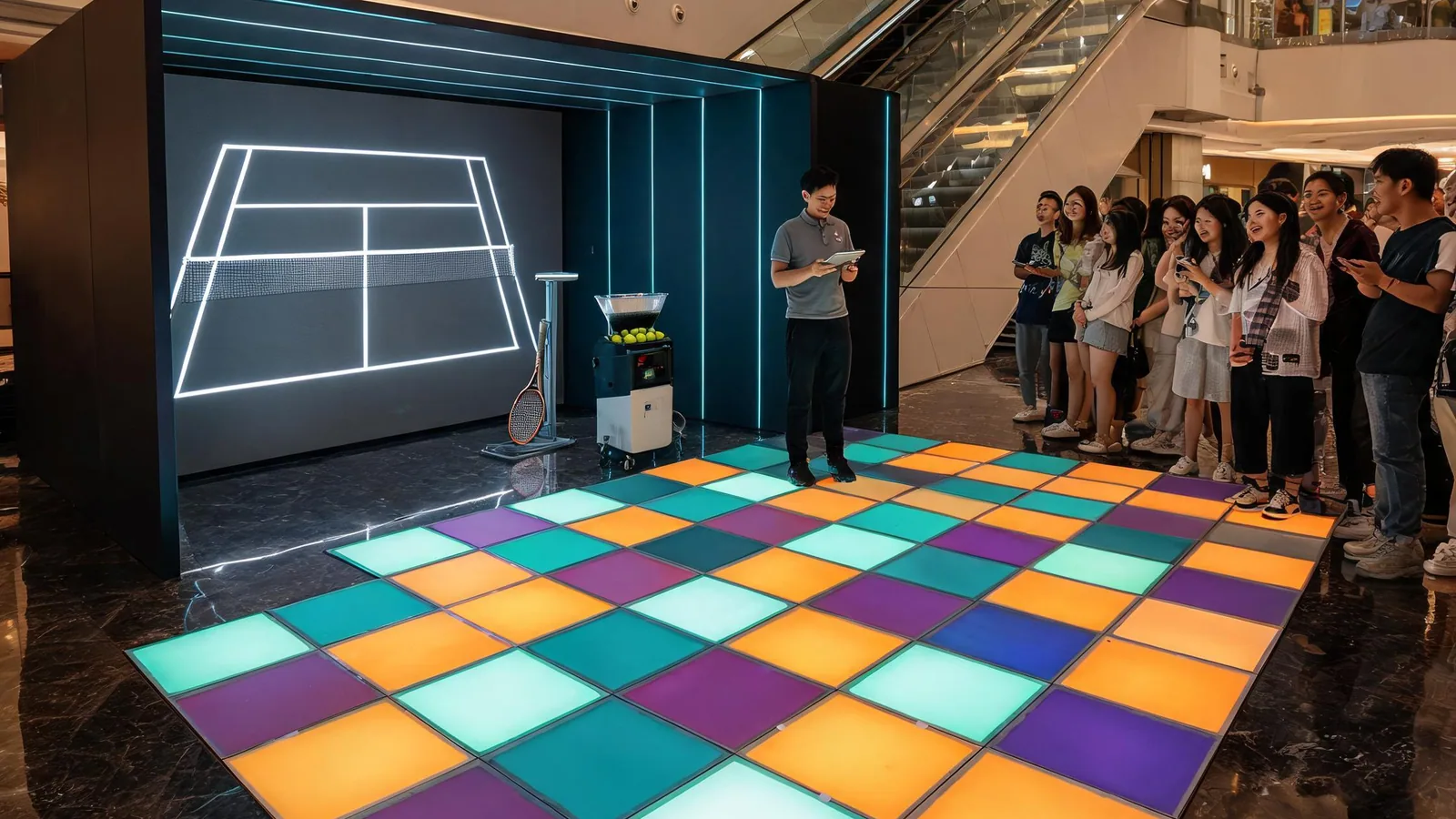
A tournament is a product, not an event
Start by correcting a widespread mistake. Venues that treat tournaments as “events” run them intermittently — one on a public holiday, one in the slow season, and the crowd disperses afterwards. Venues that treat tournaments as a “product” run them cyclically — fixed schedule, fixed format, fixed honour system — and customers follow your season the way they follow a league. The first produces one-off footfall; the second builds a repeat-visit structure.
The second meaning of tournaments as a product is that they have a defined target audience and value proposition. Competitive social layer equipment (Competitive Ping Pong, Super Tennis, Basketball Master, Dart Machine, Football League, Super Curling) appeals most to people who want to win — young adults, sports enthusiasts, colleagues and friend groups. What a tournament gives them is not a discount but **opponents, rankings and honours**; a price cut can never buy those three.
There is a further commercial logic: a tournament turns a single transaction into a “preparation cycle”. A customer who has signed up for the monthly event comes in to practise beforehand — what they bought is not only match day but multiple visits across the whole preparation period. That is the root reason tournaments can move repeat business: they manufacture a continuous reason to come in instead of a one-off discount stimulus.
- Tournament as product: fixed cycle, fixed format, fixed honours — run it like a season
- Competitive social layer customers want opponents, rankings and honours, not discounts
- Tournaments create a “preparation cycle”, turning one visit into many
Tournament tiers: daily, monthly, annual flagship
Build the tournament system in three tiers, each with a distinct job. **Daily tournaments** (a fixed slot each day, for example the two golden evening hours): lowest barrier, lightest organisation, sign up on the spot, result within fifteen minutes, small prizes and points for the winners. Their job is to turn “dropping by to play” into “coming specifically to compete”, while generating time-slot heat around the equipment. **Monthly tournaments** (one themed discipline each month): sign-up one week ahead, drawn groups, a published schedule; an entry fee is optional — the key is to close the loop with points offset (see the next section). Their job is to create a periodic visit peak.
**The annual flagship** (one per year, multiple disciplines combined) is the venue’s brand asset: champion board, honours wall and a finals-day ceremony all need to be done properly. Eligibility can be tied to the monthly events — the top points finishers earn seeded places. The three tiers form a promotion path: practise daily and bank points → climb the monthly ranking → compete for honours at the annual finals.
The point of tiering is where you spend energy. Most venues fail by doing it the other way round: an annual flagship only (once a year, over-invested), no daily tournaments (no reason to come in on any given day). The correct relationship is a pyramid — daily events are the base, monthly events the middle, the annual flagship the peak. The steadier the base, the more weight the tiers above it carry.
- Three tiers: daily (light, high frequency) / monthly (themed, cyclical) / annual (brand asset)
- Promotion path: bank points daily → climb the monthly ranking → compete for annual honours
- Allocate effort as a pyramid; the daily tier is the base, not optional
The full tournament flow: sign-up, grouping, scoring, awards
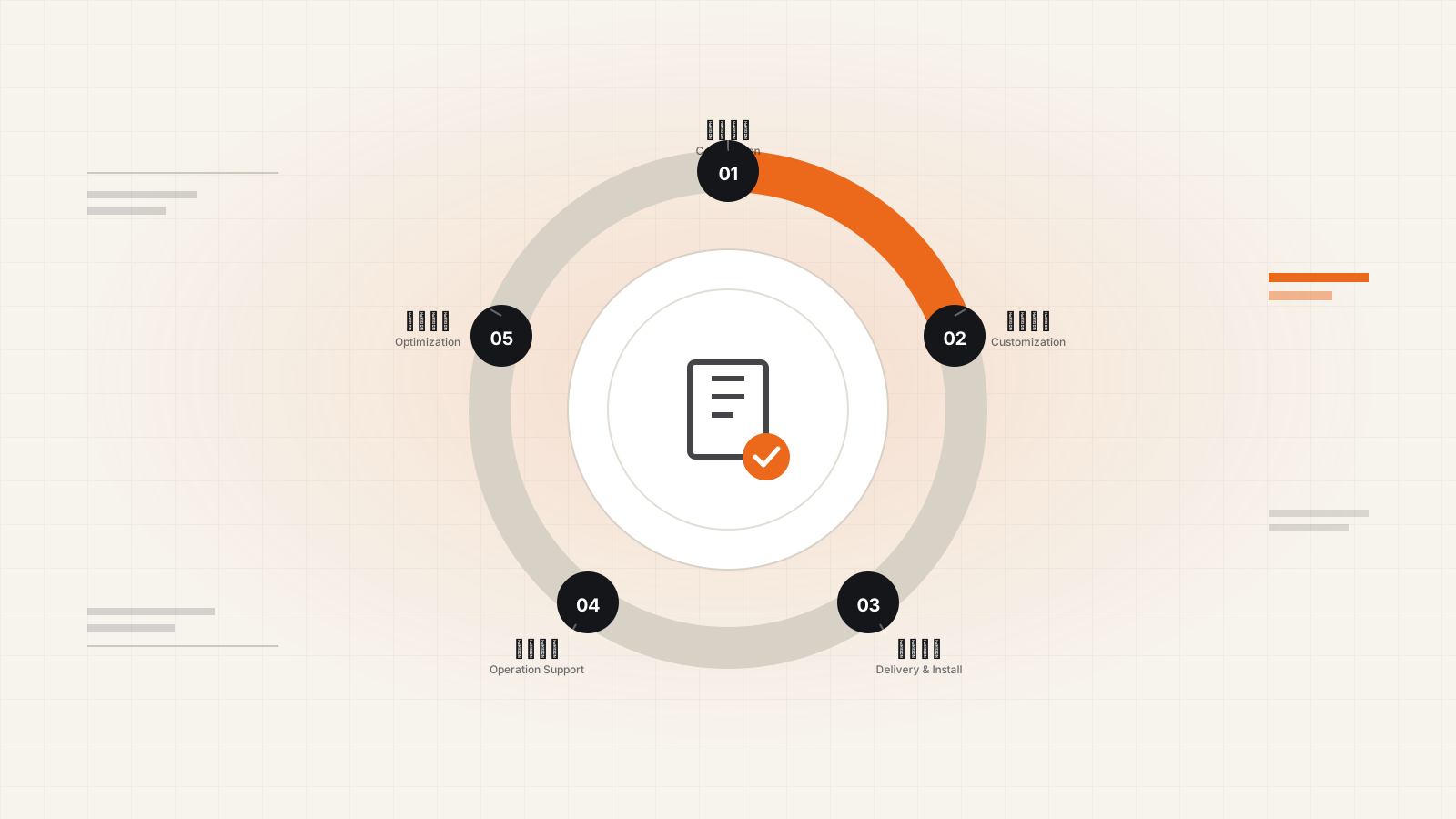
Whether an event runs smoothly depends on whether the process is standardised. **Sign-up**: an online sign-up sheet or mini-programme registration, collecting contact details and discipline preferences — which is also the membership conversion entry point, since non-members can be offered a membership card at the moment they register. Close sign-up two days early to leave time for grouping and notification. **Grouping**: group by skill, not at random — beginners and veterans in the same group leave both sides unsatisfied. For a first event with no data, let players choose an “recreational” or “competitive” division; after one round, group by points ranking.
**Scoring**: competitive equipment produces digital scores by nature; what matters is a single points rule published on the spot — how many points for a win, the win-streak bonus, how a forfeit is counted — printed on one page and posted at the court. Disputes always break out where the rules are vague. **Awards**: ceremony does not need to be expensive, but must be immediate — hand out prizes within ten minutes of the final, photograph it and post to the community. The best prizes are “a reason to come back” (prize vouchers, a seeded place next season, a name on the honours wall); purely physical prizes carry far less word-of-mouth value.
After three full cycles, consolidate the process into a fixed operating manual: who counts registrations, who referees on site, who takes photos and posts them, who enters the points. The worst habit in tournament operations is reinventing the event every time. Once the process is fixed, the extra labour per daily tournament can be pressed very low — that is the precondition for “running one every day”.
- Close sign-up two days early and use it for membership conversion
- Group by skill: self-selected division first, points ranking after
- Post the rules on one page; award within ten minutes; the prize is a reason to return
Membership system: tiers, benefits and pricing
Three things to get right in membership design, and the order matters. **First, define benefits before pricing**: the common error is to set a card price (say, the annual fee) and then work backwards to benefits, which end up too thin to sell. Do it the other way: decide what a member actually gets. Ticket discounts are only the baseline; the real differentiation is priority tournament entry, double points, exclusive time slots and birthday privileges — things non-members cannot obtain.
**Second, keep tiers few and clear**: two or three levels is enough (for example standard / gold / black), each upgrade triggered automatically by spend or accumulated points. Beyond three tiers, customers cannot remember the differences and staff carry a heavy explanation cost. **Third, every benefit must be redeemable**: each one needs a redemption path — how the exclusive slot is booked, where double points apply, how the birthday privilege is claimed. A benefit advertised online that cannot be redeemed damages trust more than having no benefit at all.
The test of pricing is not “how fast it pays back” but **visit frequency**. Member pricing gives away a little margin per transaction in exchange for locked-in visit frequency — a member who comes four times a month contributes far more across the year than a one-off walk-in. Do the maths on “annual visits × average ticket + renewal rate”, not on the cash flow of the day the card was sold. Impulse-style pricing (an ultra-low first-month price to chase volume) ends in a cliff-edge renewal rate; use that tactic sparingly.
- Define differentiated benefits first (priority entry / double points / exclusive slots), then price
- Two or three tiers are enough; upgrades trigger automatically
- Judge on visit frequency and renewal rate, not the cash flow of card sales
Points system: the earn, burn and redeem loop
The most common points mistake is issuing without burning: points for spending, points for check-in, points for competing, but very few places to spend them. Points then become an ever-inflating liability, customers lose interest and operators wince at the number. A healthy points system is a closed loop: **earning with rhythm, burning with somewhere to go, redemption with real appeal**.
**On the earning side**, tie points to the behaviour you want to encourage — in-venue spend, tournament entry, bringing a new customer, posting results in the community. The closer the behaviour is to repeat visits and word of mouth, the stronger the justification for awarding points. **On the burning side**, open at least three exits: points offsetting spend (tickets and terminals), points exchanged for benefits (tournament entry offset, exclusive slots), and points exchanged for physical goods (small items in the points mall). Design the value so the benefit exit is the best deal, steering points towards repeat visits rather than clearing inventory.
The appeal of **redemption** comes from temptation within reach: set a ladder of thresholds — small point balances can always buy something small, larger balances can be saved over a quarter for something substantial. Make everything unattainably expensive and points become decoration. One final discipline: **once published, points rules must not be changed quietly**. Devaluation is the biggest killer of a loyalty programme’s credibility; adjustments can only add value or be rolled out as an announced new cycle.
- Three parts of the loop: earning tied to behaviour / three burn exits / a laddered redemption scale
- Make the benefit exit the best deal so points flow towards repeat visits
- Never change published rules quietly; devaluation destroys credibility
Tournaments × points: how the two gears mesh
Tournaments and points both work on their own, but meshed they are far more powerful. **Competing earns points**: wins at daily tournaments earn points, monthly placings earn large point awards, and the points ranking becomes the grouping basis for the next edition — competitive behaviour automatically settles into a repeat-visit asset. **Points offset entry**: monthly entry fees accept partial points offset, so points saved during the month have a clear use and the barrier to competing drops further.
**The ranking is the honour**: publish the points table monthly in a prominent place in the venue and in the community. Appearing on it is itself an honour; those at the bottom think about “playing a few more to climb”, those in the middle guard against being overtaken. A continuously updated leaderboard is the cheapest repeat-visit engine available. **Year-end settlement**: announce the annual reset or halving rule in advance, so points do not pile up and expire unnoticed, and so “use your points” becomes a fourth-quarter reason to visit.
The key to meshing lies at the system level: tournament management and the points module must be connected — entry records write points automatically, points rankings generate groups and leaderboards automatically. Bowlanding Ant’s Venue Smart Management System (¥58,000) covers five modules: ticketing, membership, tournaments, loyalty points and analytics. Tournaments and points share one source of data, so the linkage is a configuration task, not a development project. If a venue records tournaments and points in two systems that cannot talk to each other, the gears never mesh, and manual reconciliation soon burns out everyone’s enthusiasm for operations.
- Competing earns points, points offset entry, ranking is honour, settlement rules announced upfront
- A continuously updated leaderboard is the cheapest repeat-visit engine
- Tournaments and points must share one data source; manual reconciliation is unsustainable
Community operations: giving competitive drive room to ferment
Community is the amplifier for tournaments and points. Building a group is easy; keeping it alive is hard — most venue groups die by becoming a notice board: only adverts, nobody talking, silent within three months. The core of keeping a group alive is **giving customers content they can keep sharing**: today’s daily tournament report, movements in the points table, next week’s monthly sign-up link, an alert when member-exclusive slots open — every post should give people something to reply to and something to turn up for.
Fix the rhythm: **daily** results (lightweight, one or two photos and a line of text), **weekly** points table and next week’s tournament preview, **monthly** full coverage of the monthly event (sign-up deadline reminder, published groups, live-style schedule updates, an awards photo wall). A fixed rhythm builds expectation, and expectation becomes habit. Beyond content, add interaction: points for posting results, a group prediction contest for the monthly champion, team-up discounts for bringing a friend — turning members from spectators into participants.
**KOCs (key opinion customers)** deserve dedicated investment. Every group has a few regulars who are enthusiastic, like organising and carry authority. Give them a role — group moderator, tournament convenor — plus a points allowance, and the small pickup matches and arranged games they organise themselves are activity no advertising budget can buy. Budget the community labour: half an hour a day of fixed effort buys low-cost reach across three scenarios — tournament sign-ups, membership renewals and new-customer referrals.
- Daily results / weekly table / monthly coverage — a fixed rhythm builds expectation
- Points for posted results, prediction contests and team-up discounts turn spectators into participants
- Develop KOCs as convenors; half an hour of fixed daily effort
Metrics: five numbers that test whether the system is healthy
Five numbers test how tournaments, membership and points are performing. **Tournament participation rate**: registered players as a share of active members — it measures the appeal of the tournament product itself. If it is low, check the event design first (time slot, discipline, barrier); do not rush to add prizes. **Member visit frequency**: average monthly visits per member, a direct read on the substance of member benefits; if the benefits are bland, frequency drops immediately.
**Points burn rate**: redeemed points as a share of points issued — a healthy range is roughly 60–80%. Too low means the redemption exits lack appeal or the thresholds are too high, and points are turning into a liability; close to 100% means redemption is too easy and the repeat-visit steer has stopped working. **Return visit contribution**: the share of tournament participants who come back within 30 days, compared with a control group of non-participants — that gap is the real value of tournament operations. **Community activity**: not headcount, but the share of members who speak or respond each week; a group full of zombies produces no visits however large it is.
Compare the five numbers once a month and put them into the operations meeting. Their purpose is to locate the problem: low participation → redesign the event; low visit frequency → redesign member benefits; abnormal burn rate → redesign the redemption exits; small return-visit gap → the tournament is not differentiated enough; silent community → the content rhythm has broken down. Numbers do not lie — provided you look at them monthly.
- Five numbers: participation / visit frequency / points burn / return-visit gap / community activity
- Healthy burn rate is about 60–80%; too low becomes a liability, too high loses the steer
- Review monthly, with a specific corrective action behind each number
Common failure causes: one-off tournaments, points that are only issued
Reviewing unsuccessful tournaments and membership programmes, the causes cluster tightly. **First, tournaments become one-off events**: a lively opening, then no fixed cycle, and customer enthusiasm has nowhere to land. **Second, the format is too heavy**: even daily events are run as formal championships, with organisation costs too high to sustain — the daily tier must be light, light enough to run every day. **Third, prizes are misaligned**: all physical, so no amount of winning connects to the next visit, and the heat ends when the event ends.
**Fourth, points are issued but never burned**: generous on the earning side, barren on the burning side, so points become a number nobody takes seriously. **Fifth, rules change constantly**: double points today, shrunken benefits tomorrow, and customers lose trust in the system. **Sixth, data is siloed**: tournaments in a spreadsheet, points in a notebook, membership in the POS, three sets of books that never reconcile, and operators decide on gut feel.
Six causes map to six disciplines: put tournaments on a fixed cycle, keep the daily tier light, turn prizes into benefits (a prize is a reason to return), close the points loop, stabilise the rules, and systematise the data. None of the six requires major extra spending — they only require designing operations as a product. That is why venues with the same equipment and the same floor area can differ several times over in repeat business.
- Six disciplines: cyclical / lightweight / prizes as benefits / points loop / stable rules / systematised data
- The daily tier must be light enough to run every day, or the system has no base
- The repeat-visit gap comes from operational product design, not from equipment
System rollout: what each of the five modules owns
Put into Bowlanding Ant’s Venue Smart Management System (¥58,000), the whole system above becomes a division of labour across five modules. **Ticketing** owns entry: tickets, sessions, time-slot passes and member redemption. **Membership** owns identity: tiers, benefits, stored value and profiles — tournament registration and points both hang off the member profile. **Tournaments** owns organisation: schedule creation, registration management, grouping and score records; the lightweight daily process is locked in here. **Loyalty points** owns the currency: earning rules, burn exits, the redemption mall and leaderboards. **Analytics** owns review: visit frequency, participation rate, points burn rate and return-visit contribution — the five numbers are reported from here.
Recommended rollout order: ticketing and membership first (the identity layer), then points once that runs smoothly (the currency layer), then tournaments (the activity layer), with analytics accumulating data throughout and reporting at month end. Trying to do everything at once is the most common rollout failure — the modules depend on each other, and if the identity layer is not stable, points and tournaments are castles in the air.
The value of the system is not the number of features but **a single data source**: every step from buying a ticket, competing and earning points to redeeming sits in the same profile. What operators see is no longer fragmented ledgers but individual people they can actually operate on. That is the technical precondition for tournaments and membership to run for years — tools do not replace thinking, but they spare good thinking the drudgery.
- Five modules: ticketing for entry / membership for identity / tournaments for organisation / points for currency / analytics for review
- Rollout order: ticketing and membership → points → tournaments, following the dependencies
- Core value is a single data source: every step lives in one customer profile
Annual operating calendar: fitting the system into twelve months
The system ultimately has to land on one calendar. **Q1**: annual flagship registration opens; the membership renewal season runs with a benefit-upgrade announcement alongside renewal offers; the annual points-reset notice goes out a month ahead. **Q2 and Q3**: monthly events rotate disciplines by theme (each quarter spotlights a different piece of competitive equipment so the equipment matrix takes turns in the lead), and family-oriented light events in the summer holidays (parent–child team matches) fill the peak periods.
**Q4**: the points sprint — the reset notice enters execution, redemption exits are promoted harder, and “use your points” becomes a reason to visit; the annual flagship final is scheduled at year end, and finals day doubles as member appreciation day, with the honours wall updated, KOCs recognised and next season previewed in one go. **Monthly fixed actions**: monthly tournament + points table publication + member benefit review. **Weekly fixed actions**: points table update + community tournament preview. **Daily fixed actions**: daily tournament + results report.
The point of a calendar is to turn operations from firefighting into sowing: what should happen in each period is decided in advance, leaving only execution and no improvisation. After one full year you hold three assets — a format that has been honed, a membership list with real stickiness, and a community that talks to itself. None of the three depreciates with the equipment; they are the part of the venue that genuinely compounds.
- Q1 renewals and flagship launch / Q2–Q3 rotating monthly disciplines / Q4 points sprint and finals day
- Fixed actions at monthly, weekly and daily level; operations shift from firefighting to sowing
- Format, membership list and community are three assets that do not depreciate
FAQ
Does a small venue need to run tournaments?
Even more so. A small venue cannot compete on floor area or equipment count; tournaments are a low-cost differentiator — one piece of competitive equipment plus a fixed format is enough to start. Begin with small daily events: one per day in the golden hours, a result within fifteen minutes, points for the winners. Run that for three months to establish the habit, then add monthly events.
What is the difference between daily, monthly and annual tournaments?
Daily events are light (sign up on site, result within fifteen minutes, runnable every day) and create a reason to visit each day. Monthly events are heavier (advance sign-up, drawn groups, a themed discipline) and create a periodic visit peak. The annual flagship is a brand asset (multiple disciplines, honours wall, finals-day ceremony), with eligibility tied to monthly points. The three form a promotion path: bank points → climb the ranking → compete for honours.
Should tournament entry be charged?
Prefer points offset over a direct fee: entry accepts partial points offset, and non-members can pay a small cash fee (with a membership card offered at that moment). Purely free entry gives a high sign-up rate but also a high forfeit rate; a pure fee raises the barrier. Points offset both absorbs the points liability and lowers the barrier to competing.
How many membership tiers are appropriate?
Two or three is enough (for example standard / gold / black), with upgrades triggered automatically by spend or accumulated points. Too many tiers and customers cannot remember the differences while staff carry a heavy explanation cost. The key is that each tier has differentiated benefits non-members cannot get: priority tournament entry, double points, exclusive slots, birthday privileges.
How should the points ratio be set?
There is no standard answer, but three principles apply. Tie the earning side to the behaviour you want to encourage (repeat visits, competing, referrals). Open at least three burn exits (offsetting spend, exchanging for benefits, exchanging for goods), with the benefit exit the best deal. Never change published rules quietly — devaluation is the biggest killer of programme credibility. After launch, calibrate with the burn rate; a healthy range is roughly 60–80%.
What if points are issued and never redeemed?
That is the classic symptom of issuing without burning. Three remedies: add burn exits (offsetting spend, benefits and goods at the same time), set a redemption ladder (small balances for small items anytime, large balances saved for something substantial each quarter), and use an annual reset rule (announced in advance) to clear historic accumulation. Put the burn rate into your monthly metrics and adjust the redemption design as soon as it is too low.
The community group has gone silent — how do I revive it?
A zombie group is rooted in advertising without content. Switch to a fixed rhythm: daily results, a weekly points table, monthly event coverage, with every post giving people something to reply to. Then add interaction — points for posted results, a monthly champion prediction contest, team-up discounts. At the same time develop two or three enthusiastic regulars as KOC convenors, giving them a role and a points allowance, so the group turns from a notice board back into a gathering place.
What system support is needed?
Ideally ticketing, membership, tournaments, points and analytics share one source — Bowlanding Ant’s Venue Smart Management System (¥58,000) covers all five, with entry records writing points automatically and points rankings generating groups and leaderboards automatically. The worst setup is two systems that cannot talk to each other, recording tournaments and points separately; manual reconciliation is unsustainable. Rollout order: ticketing and membership first, then points once stable, then tournaments.
How do I measure whether tournaments and membership are working?
Watch five numbers: tournament participation (registrations / active members), average monthly member visits, points burn rate (60–80% is healthy), the 30-day return-visit contribution of participants versus a control group, and the share of community members active each week. Compare them once a month, with a clear improvement direction behind each number — not a purely reporting-style dashboard.
RELATED
 Digital Sports Venue Operations & Repeat-Visit Playbook
 Digital Sports Venue Marketing & Local Customer Acquisition Guide
 Indoor Digital Sports Venue Investment & Opening Guide
 Mall Digital Sports Park Planning Guide
 Arcade & FEC Digital Transformation Guide
 Digital Sports Venue Equipment Refresh and Iteration Planning Guide
 Cultural Tourism Digital Sports Park Delivery Plan
CONTACT
Talk through your tournament and membership plan
Share your venue equipment list and target customer groups, and we can offer reference advice on tournament tiering, a points system framework and management system selection.
2026-11-10