
CUSTOMER ACQUISITION & LOCAL MARKETING
Digital Sports Venue Customer Acquisition & Local Marketing Playbook
How a digital sports venue wins customers: getting the map and local search basics right, splitting four traffic channels with separate targets, then working through local short video, local lifestyle platform packages, private-domain communities and partnerships within three kilometres, followed by pre-opening presale, referral loops and small-budget paid media — closing with a per-channel acquisition cost method and a monthly marketing calendar.
Most digital sports venues do not fail on equipment. They fail because nobody knows the place is there. Opening-period buzz carried by social feeds and launch posters can hold for a while, but three months in, steady footfall comes from just two things: local customers can find you, and the people who came once want to come back.
This guide deals only with acquisition and local marketing. First we turn the store listing into a searchable asset, then divide four traffic channels by responsibility, then break down local short video, local lifestyle platforms, private-domain communities and partnerships within three kilometres, followed by pre-opening presale, referral loops and small-budget paid media — and finish with a way to calculate acquisition cost per channel and a monthly marketing calendar.
Starting point: be findable locally first
A digital sports venue is a local business by nature; customers usually decide within a couple of kilometres. So the first priority is not national reach but being found correctly on maps and in local search. Store name, category term, district term, opening hours, phone number, spend per head and real photographs — miss any one of them and you lose customers who were already on their way.
Three entries have to be complete: the map POI, the store page on local lifestyle platforms, and the local feed page on short-video platforms. All three must agree exactly, including how the name is written, the address down to the floor, the opening hours and the phone number. Platforms cross-check these, and inconsistency both lowers display weight and discourages customers who are already standing in the building.
The four most common mistakes: no category term in the store name (so searching for a sports venue never surfaces it), an address that names the mall but not the floor, renders instead of real photographs, and holiday hours that are never updated. The check is simple: search on your phone for nearby sports venues, or for the district name plus the activity, and see whether you appear and whether the details are right.
- Store name = brand + category term + district term; the profile states what can actually be played
- Map, local lifestyle platform and short-video local feed must match exactly
- Check hours, phone and real photos weekly; update holidays separately
Channel layers: four kinds of traffic, one job each
Venue footfall actually comes from four different kinds of traffic: search traffic (people with a clear intent), platform traffic (people who compare prices and read reviews), content traffic (people who were intrigued by a video and have not decided where to go), and private-domain traffic (people you have already reached). Their cost structures and conversion paths differ completely, and looking at them as one number always produces the wrong conclusion.
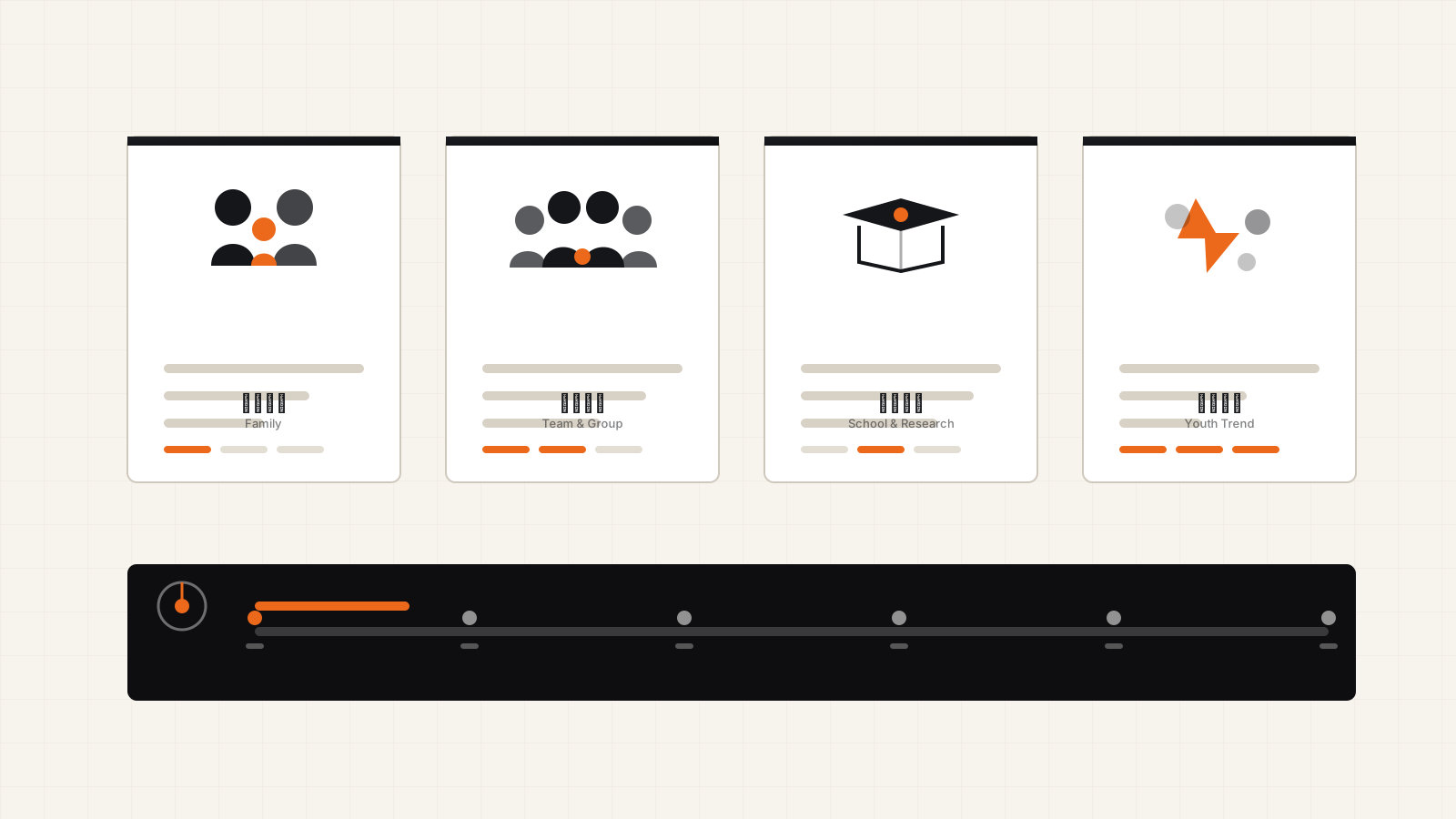
The division of labour should be explicit. Search looks after people who want to find a venue, judged on listing accuracy and direction clicks. Platforms look after people comparing prices, judged on package redemption rate and rating. Content looks after people who have not decided to play yet, judged on the path from views to group deals or direct messages. Private domain looks after people who have already visited, judged on benefit redemption and return visits.
Targets have to be set separately, or content and private domain will always be cut first. Their conversion chains are the longest, so measured on short-term ROI they never look worthwhile — yet they are exactly what determines steady footfall three months out. The sensible approach is a separate goal for each channel, consolidated monthly into a total acquisition cost.
- Search = accuracy; platforms = packages and reviews
- Content = footage and scenarios; private domain = benefits and win-back
- Set goals per channel, review total acquisition cost monthly
Local short video: footage a viewer understands in three seconds
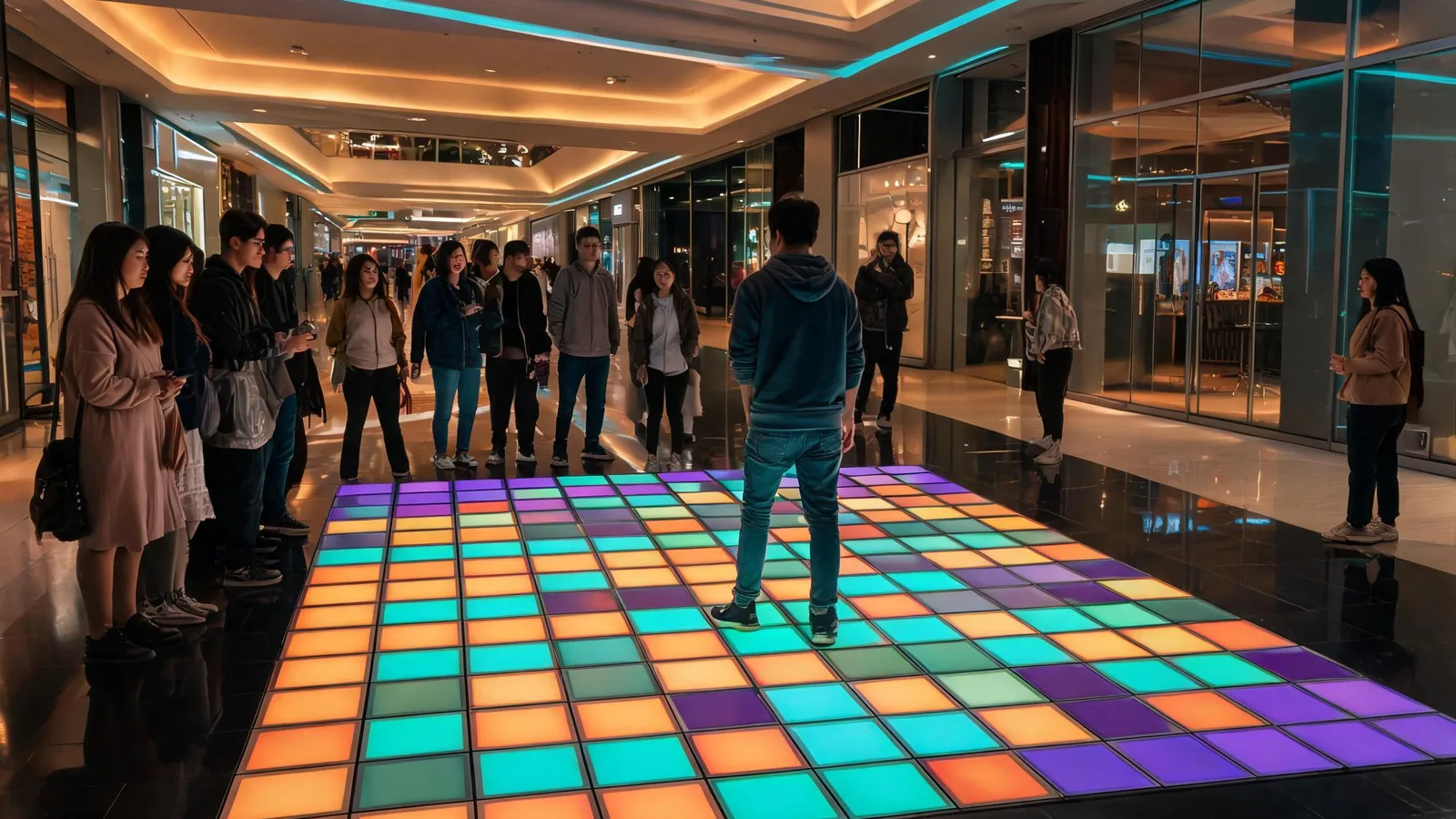
Sports equipment has a natural visual advantage: lighting effects, movement, head-to-head play, leaderboards. The point of short video is not explaining specifications. It is letting a viewer grasp three things in three seconds — what this is, how it feels to play, and where it is. Specifications belong on the detail page; the first three seconds belong to the picture.
Three reusable content templates: equipment highlights (a single player plus close-ups, doing the seeding), competitive scenes (two or more players plus onlookers reacting, providing social proof), and venue experience (layout, atmosphere, price and location, driving the final decision). Rotating the three across the week is far more consistent than filming something random every day.
Shooting and publishing need discipline: a fixed camera position, vertical format, movement on screen within the first three seconds, captions naming the city and district, and a location entry point at the end. Tag local rather than chasing broad national reach. A video with a hundred thousand broad views often brings fewer people through the door than a local one with three thousand.
- Three templates: equipment highlights, competitive scenes, venue experience
- Movement on screen in the first three seconds; captions with city and district
- Local tags over broad reach; a location entry point at the end
Local lifestyle platforms: the package is the product, the rating is the asset
Customers on local lifestyle platforms arrive with clear intent to compare and decide, which makes the store page a shelf and the package structure a direct driver of spend per head and conversion. A structure that works usually has three tiers: a traffic package (a low-barrier single visit), a core package (two-person, family and friends combinations), and a high-value package (exclusive bookings, birthdays, team building).
Ratings and reviews are a long-term asset, not a number to spike at opening. Four clusters of complaints have to be closed out one by one: queues and bookings, equipment faults, cleanliness, and staff attitude. Replies should address the specific problem and the specific fix; a boilerplate thank-you for your feedback actually reduces credibility.
Three frequent mistakes: package descriptions that do not match what is delivered, holiday surcharges that are not disclosed clearly, and refund or rescheduling rules buried in the fine print. These lift conversion in the short term and accumulate complaints over time — and once platform weight and rating fall, recovering costs far more than the extra margin was worth.
- Three tiers: traffic, core, and high-value (exclusive bookings and team building)
- Close the loop on four complaint types: queues, equipment, cleanliness, service
- Publish surcharge, refund and rescheduling rules on the page, not in the fine print
Private domain: make visitors reachable again
Private domain is not blasting advertisements at people who added you. It is building a reminder system for the next visit. Adding a contact needs a concrete hook: member benefits, tournament entry, a birthday gift, a time-slot-only rate. The more specific the hook, the higher the opt-in rate — and the lower the irritation when you message them later.
Three actions to put in place: capture contacts in venue (point-of-sale materials, one line of script from staff, an immediate small benefit), tag by segment (family, young adult, group; preferred equipment; visit frequency), and trigger on a cycle (tournament entry, benefit expiry, birthdays, win-back after 30 days of silence). Tags determine targeting precision; an untagged broadcast says the same thing to everyone.
A content rhythm of once or twice a week works, led by events and tournaments with promotions as the supporting act. The group needs fixed slots — weekly leaderboard, tournament previews, release of unsold time slots — so members have a reason to stay. A group that only ever carries coupons degrades into a silent advertising channel within two weeks.
- Concrete hooks: benefits, tournaments, birthday gifts, time-slot rates
- Three tags: customer segment, preferred equipment, visit frequency
- Fixed slots: weekly leaderboard, tournament previews, released time slots
Partnerships within three kilometres: trade exposure, do not buy it
Businesses and institutions within three kilometres of the venue share the same customer base without competing: restaurants, children's education, gyms, cinemas, office tenants and residential property management. The core of these partnerships is exchanging resources rather than buying traffic, which also makes it the best-value acquisition method on a limited budget.
Four workable formats: reciprocal materials (roll-up banners, screens, the back of receipts), co-branded packages (dining plus sport, a children's class plus a trial ticket), employee benefits (team building and benefit purchasing by office tenants), and cross-promotion in each other's communities. Each one needs its own redemption code, otherwise there is no way to judge whether it worked.
Partnerships should be reciprocal and time-bound. Pick one of three settlement models and write it down clearly: by exposure, by in-venue redemption, or by revenue share. Give each partnership a defined period and review it at the end to decide whether to renew or replace. The usual failure is not finding partners — it is putting up the materials and never tracking them, so nobody knows how many customers came.
- Four partner types: restaurants, children's education, gyms, offices and property management
- Four formats: reciprocal materials, co-branded packages, employee benefits, community cross-promotion
- Dedicated redemption code, a fixed partnership period, a review at the end
Pre-opening presale: lock in the first customers early
The biggest waste around an opening is not a lack of advertising — it is starting acquisition on opening day. Presale exists to lock in the first in-venue customers while fit-out is still being finished, and at the same time to test the price band and the package structure. The real return is not the presale cash but the early, concrete feedback on who will come and how much they are willing to pay.
Presale usually runs in three steps: seed recruitment first (staff at nearby businesses, communities, referrals from past customers — offering experience-officer places in exchange for honest feedback and material), then early-bird cards (a stored-value or visit card limited to a set window, with clear benefits, refundable and transferable, so trust is not over-drawn), and finally an opening-week package (a core package plus a time-limited bonus, capturing the people the early bird did not reach).
Two red lines apply. Do not turn presale into an indefinite low price, or full-price pricing will never stand up. And delivery capacity has to keep pace: if presale volume exceeds what the floor can carry, open cards in batches rather than making customers queue for an hour. The first experience at opening decides whether these people become long-term members.
- Three steps: seed recruitment → early-bird cards → opening-week package
- What presale really needs is customer and price feedback, not the cash
- Two red lines: no indefinite low pricing, no overselling beyond capacity
Referrals and word of mouth: let satisfied customers bring people
Referral is the cheapest acquisition channel there is, but it cannot be designed into existence — it can only be triggered. The moments when a customer is willing to bring someone are usually very specific: a child played to their heart’s content, they won a match, they took a place on the leaderboard, they joined an event that was run well. The operator’s job is to offer an easy reason to share at exactly those moments.
Three mechanisms that work: a two-person benefit (an existing customer brings a new one and both receive a visit or a time-slot upgrade), team entry (registration by team, which naturally requires recruiting people), and family and friends cards (one card covering several people, lowering the decision cost per person). All three beat share-this-post-and-collect-likes mechanics, because they make sharing part of the experience rather than a task.
Two traps to avoid: rewarding only the existing customer, so the newcomer feels like a tool that was dragged in; and setting rewards to cash rebates, which tend to attract dedicated bargain hunters. Better to give experience-based benefits and to make the newcomer’s first visit genuinely good — what really decides referral is always how that first visit felt.
- Three trigger points: a great session, a match won, a well-run event
- Three mechanisms: two-person benefit, team entry, family and friends cards
- Reward experiences rather than cash; both sides must gain for it to last
Local paid media: how to spend a small budget
Paid media is not the starting point of acquisition; it is an amplifier. Spending before organic content has found a working template and before the listing details are accurate only magnifies the problem: weak footage reaches more people, and wrong information sends more navigation requests to the wrong place. The sensible order is to prove organic traffic first, then use paid media to amplify content already shown to work.
With a small budget the usual priority is: locally targeted feed ads (amplifying proven short video) → promoted placements on maps and local lifestyle platforms (intercepting clear intent) → community and office-building out-of-home exposure (covering three kilometres) → cross-city or broad reach (considered last). The first two can be attributed directly; the last two are better suited to awareness, and the measurement basis should differ.
Set three stop-loss lines: a single channel running above average acquisition cost for two consecutive weeks, click-to-visit conversion persistently below organic, and customers from paid media repurchasing significantly worse. When a line is hit, stop and move the budget to a better-performing channel. The biggest waste in paid media is not spending on the wrong thing, but spending on the right thing and not daring to stop.
- Prove organic traffic first, then amplify what works with paid media
- Priority: local feed ads → platform placements → community exposure
- Three stop-loss lines: cost, conversion, repurchase — stop when hit
Content production and team roles: who actually does this
The most common organisational problem in local marketing is that nobody owns it: the store manager is on the floor, marketing sits at head office, and in the end the short-video account goes three months without an update and reviews go two weeks without a reply. A workable approach is to split content production into three roles with named owners: topic and script (who decides what we shoot this week), shooting and editing (who produces the footage), publishing and replying (who attaches the location, who answers comments and direct messages).
Whether to build in-house or outsource depends on update frequency. If three or more pieces a week are needed, train an in-store part-time or full-time content role — they know the equipment, the customers and the atmosphere better than anyone, and what they shoot is more authentic than an outside crew. At lower frequency, or when a high-quality brand film is required, outsourcing is better value, but the script and topic should still be decided in store.
Material needs a retention system: three folders by equipment, scenario and customer segment, new material filed every week, and photos and video exported the same day an event ends. The material library is the real asset of local marketing — the next opening, recruitment, leasing pitch or platform campaign can all draw from it instead of organising another shoot.
- Three roles with owners: topic and script, shooting and editing, publishing and replies
- High frequency: build an in-store content role; low frequency, high-end: outsource
- Build a library by equipment, scenario and segment; file on the day of the event
Acquisition cost accounting and the monthly marketing calendar
Acquisition cost has to be calculated per channel, and the denominator must be the number of in-venue redemptions — not leads, not contacts added, not views. The formula is: spend on a channel in the period divided by the number of first in-venue redemptions that channel produced. Record how those customers repurchase within 30 days as well, or you will always overvalue the cheap channels that deliver one visit and no more.
A monthly calendar can run in three blocks: set the theme and package structure at the start of the month, concentrate tournaments and short-video publishing in the middle, and run member benefit reminders and silent-customer win-back at the end. Review channels once a quarter; any channel that has run above the average acquisition cost for two consecutive months with weak repurchase should be stopped and its budget moved to channels that retain better.
One closing point: marketing solves whether anyone comes, operations solve whether they come again. Acquisition budget and repeat-visit investment should grow together. Buying traffic without fixing the experience is simply paying to advertise your bad reviews. Only when acquisition data and operating data sit in the same table can you tell whether growth is real.
- Acquisition cost = channel spend divided by first redemptions from that channel
- Three blocks a month: set the theme, run tournaments and content, run benefits and win-back
- Quarterly review: stop high-cost, low-repurchase channels and move the budget
FAQ
How long before opening should a new venue start local visibility work?
Four to six weeks ahead is sensible. Register and complete the map and platform store pages first, since approval usually takes time, then publish renovation progress, equipment arrival and soft-opening footage so local users know what is coming. That way opening day does not start from zero.
Does local short video always need paid promotion?
No. Organic reach is enough to test whether a content template works. Publish consistently for two or three weeks and see which type — equipment highlights, competitive scenes or venue experience — drives the most profile visits and direct messages, then put a small local-targeted budget behind the best performer rather than spending across everything at once.
Should the venue list a cheap group deal on local lifestyle platforms?
It can, but keep it strictly as a traffic package with clear usable hours and excluded dates so it does not undercut full-price sales and the membership structure. The aim of a low-price package is to bring in first-time visitors who can be converted into members. If it only produces one-off traffic, scale it back or change what is included.
Nobody talks in our private-domain group. What do we do?
Usually it is because the group only carries promotions. Build fixed slots first — weekly leaderboard, tournament previews, released time slots, members-only hours — so members know when to check in and what for. Then use tournament entry and polls to start conversation. Interaction comes from content structure, not from handing out red packets.
What if there is no suitable partner within three kilometres?
Widen the category range first. Look beyond sports-related businesses to merchants with the same customers and complementary scenarios: children's education, restaurants, cinemas, office tenants, residential property management. Supplier and equipment service provider client networks are another source, and the mall operator can also act as the convener for a joint campaign.
How do we decide whether to keep investing in an acquisition channel?
Watch three numbers: the first-visit redemption cost for that channel, the 30-day repurchase rate of those customers, and how many of them move up within the membership structure. A channel above average cost but clearly better on repurchase and upgrades is worth continuing. A cheap channel with almost no repurchase is usually just buying one-off footfall.
Will pre-opening presale damage full-price pricing?
Two things decide it: whether the benefits carry a clear end date, and whether the presale audience is tightly limited. Presale framed as early-bird benefits for a defined window, with an explicit return to full price afterwards, normally does no damage. If presale stays open indefinitely and can be bought at any time, full price will never stand up.
What rewards work best for referrals?
Experience-based benefits first, not cash. A two-person visit, a time-slot upgrade, a tournament place, one extra person free on a family package — these bring newcomers in without attracting dedicated bargain hunters. Rewards should ideally work both ways, so that both existing and new customers feel the gesture is genuine.
With a limited budget, where should paid media start?
Start with locally targeted amplification of content already proven to work, then promoted placements on maps and local lifestyle platforms to intercept clear demand. Community and office-building exposure is suited to awareness but harder to attribute, so it is best considered once cash flow is stable.
RELATED
- Digital sports venue operations and repeat-visit playbook
- Indoor digital sports venue investment and opening guide
- Digital sports equipment procurement and selection guide
- Shopping mall digital sports park planning guide
- Arcade and FEC digital transformation guide
- Digital sports venue equipment safety and maintenance guide
- Digital sports venue space design and circulation planning guide
CONTACT
Send us your venue details
Share your city, district, floor area, equipment mix and opening date, and we will outline a local visibility checklist, a suggested channel split and a reference framework for opening-period marketing pacing.
2026-11-09