
Cultural Tourism Blueprint
Digital Sports Parks in Cultural Tourism Destinations: An Implementation Blueprint
How to build a digital sports park inside a cultural tourism scenic area: starting from the three hard constraints of weather dependency, peak–off-peak swings and weak secondary spend, this blueprint covers site selection, area and investment bands, the five-layer product matrix, combo tickets and challenge passports, seasonal staffing, scenic-area construction approvals, circulation and signage, group channels, operating metrics and phased delivery.
Building a digital sports park for a cultural tourism destination is a completely different job from building one inside a shopping mall. A mall serves a local audience that can come back every week; a scenic area serves visitors who come once a year, or once in a lifetime. A mall worries about homogenisation; a scenic area worries about rain, the off-season, and the sentence “there is nothing to do here except look at the view”. The same equipment, placed in these two settings, demands a different product structure, pricing model, staffing plan and construction rhythm.
This blueprint starts from the three hard constraints of cultural tourism, then works through site selection, area and investment bands, the five-layer product matrix, ticketing and secondary-spend integration, seasonal staffing, scenic-area construction approvals, circulation and signage, group channels and operating metrics. It closes with a phased delivery recommendation and the four most common mistakes. Reference area: 1,000–5,000 sqm. Reference investment: ¥5 million–¥20 million.
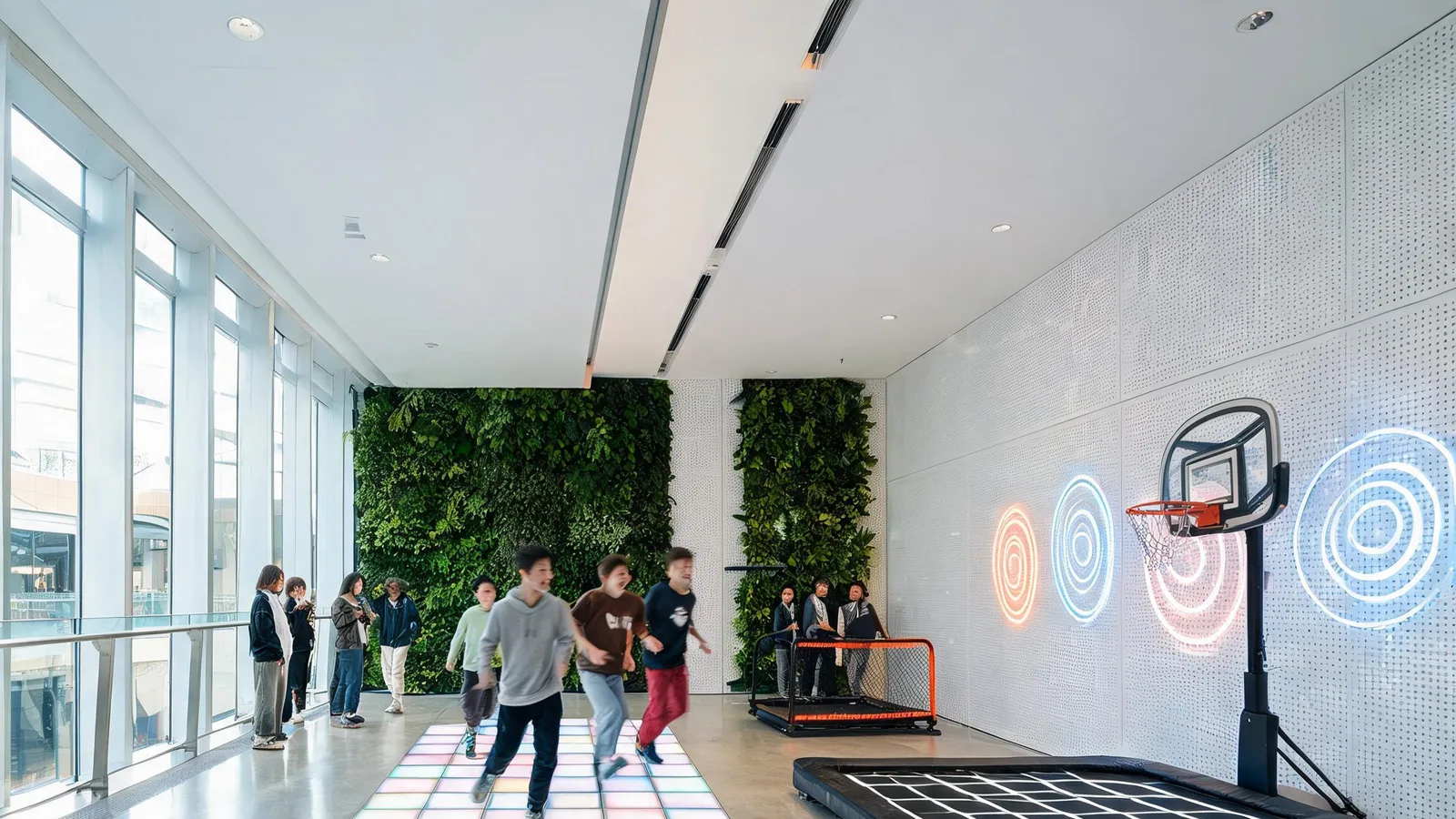
Start with the three hard constraints of cultural tourism
Any indoor sports park inside a scenic area runs into three constraints. First, **weather dependency**: outdoor attractions shut down in rain, extreme heat or hard frost, and footfall falls off a cliff. Second, the **peak–off-peak gap**: a single peak-season day can carry more than ten times the traffic of an off-season day, so staffing and equipment sized to the peak will lose money, while sizing to the average cannot handle the rush. Third, **weak secondary spend**: tickets are essential revenue, but the ceiling is fixed — a visitor who stays three hours and a visitor who stays six hours contribute to entirely different lengths of the commercial chain.
The value of a digital sports park is not first of all “one more fun piece of equipment”. It is that it hedges all three constraints at once: an indoor venue is weather-proof and keeps earning on rainy days and in low season; equipment with hourly throughput absorbs peak crowds; and the extended dwell time of “play for two hours, eat, then buy something” is exactly the precondition for secondary spend to actually develop.
The reverse is also true: cultural tourism projects rarely fail because the equipment is bad. They fail because the visitor mix was never calculated. What share is group business, what share is families, what is the ratio of self-drive to coach tours, what is the average dwell time, what share of visitors return — without these numbers, every later decision on area, equipment and ticket types is guesswork. We recommend spending one week on a visitor audit before the concept stage, counting weekdays and holidays separately.
- Three constraints: weather dependency / peak–off-peak gap / secondary-spend ceiling
- An indoor park hedges weather, peak load and dwell time at once
- Audit the visitor mix (group vs family, dwell time, repeat visits) before discussing equipment
Site selection: which plot inside the scenic area actually works
Four locations come up most often. **Beside the visitor centre or transport hub**: the advantage is that everyone passes through, so interception is highly efficient; the drawback is that floor area is usually tight. **Idle support buildings and former performance halls**: the structure already exists, so conversion is cheap, but ceiling height and column spacing may not fit. **Reserved phase-two land or a new standalone building**: maximum freedom, but construction time and investment rhythm must be planned. **The scenic commercial street**: well suited to an eat-shop-play combination, though it demands close coordination with tenants.
Whether a plot works comes down to four checks: its relationship to the main visitor route (on the main path, or requiring a deliberate detour); walkability (how long it takes to reach from the main entrance or core attraction); building conditions (ceiling height, column spacing, load capacity, power capacity); and fire and evacuation (whether it can meet the exit width and exit count required for a high-occupancy venue). If any one of these falls clearly short, you will pay for it later in money and schedule.
One warning about depth of location. To “avoid using a good spot”, many projects put the park at the far end of the scenic area, or somewhere that requires another shuttle ride — and then visitors neither know it exists nor want to make the trip. Cultural tourism tolerates far less circulation error than a mall: a mall customer will go up a floor for a venue, but a tourist will not walk twenty extra minutes for one.
- Four location types: by the visitor centre / idle support building / new standalone / commercial street
- Four checks: main route relationship / walkability / building conditions / fire evacuation
- Too deep in the site is the most common hidden cause of failure
Area and investment: start at 1,000 sqm, build a destination at 5,000 sqm
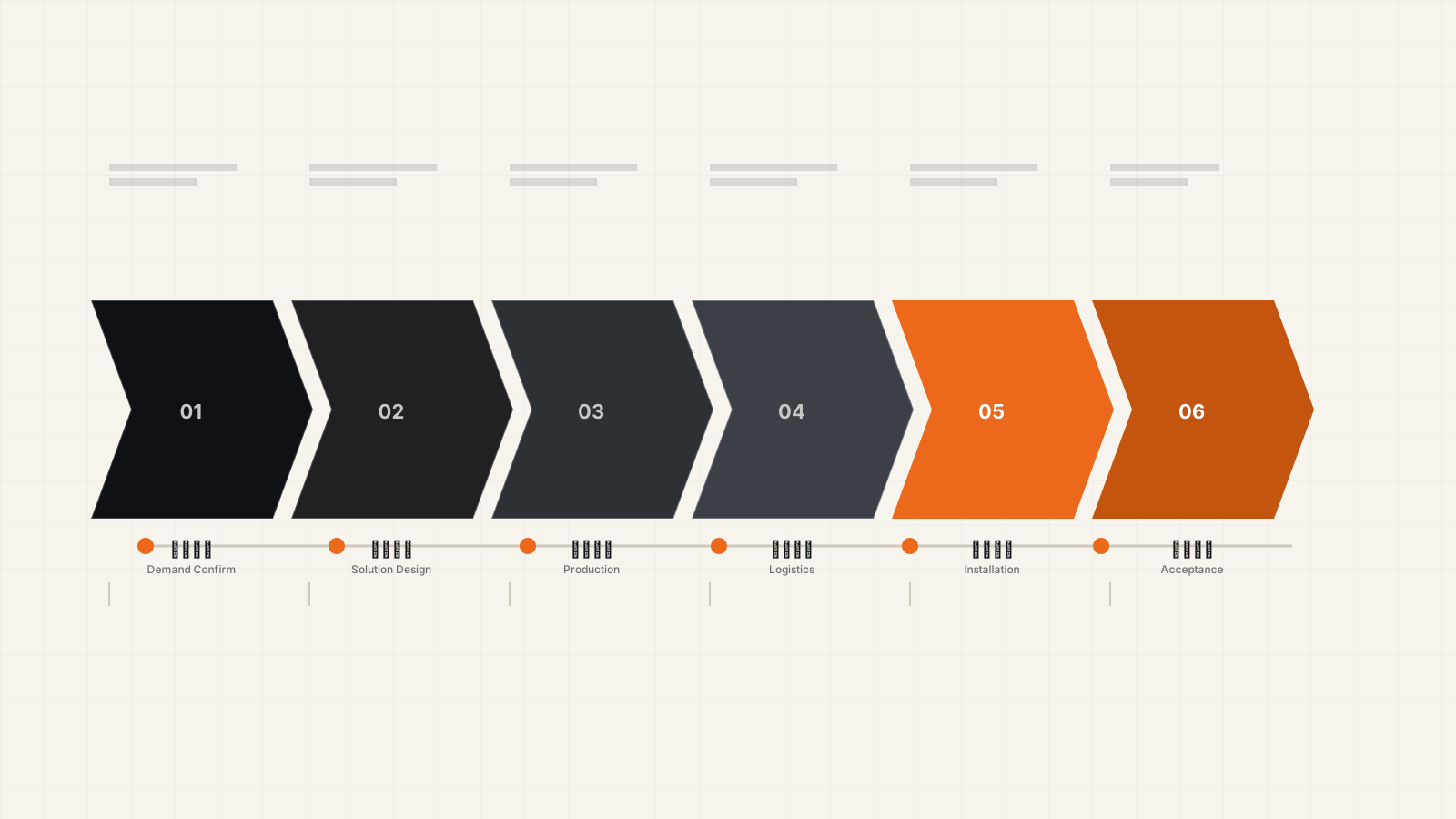
The reference area band for cultural tourism is 1,000–5,000 sqm, matching an investment band of ¥5 million–¥20 million. These are not hard standards but the boundaries between three typical formats. **1,000–1,500 sqm** is the minimum viable version — a core circulation spine plus one anchor attraction, suited to converting existing support space and topping up secondary spend through combo tickets. **2,000–3,000 sqm** is the mainstream configuration, where the full five-layer product structure fits; it can sell standalone tickets or sit inside a scenic-area package. **4,000–5,000 sqm** is destination scale, usually with F&B, retail, self-service terminals and rest areas layered on, so that visitors will make a special trip.
In the investment mix, equipment is only one part; the rest is space conversion, thematic treatment, MEP and fire systems, signage and furniture, systems and self-service terminals. The typical cultural tourism error is to put nearly the entire budget into equipment, and the venue ends up looking like a warehouse: brand-new machines, but no theme, no rest area, no photo spots — visitors play and leave, and secondary spend never gets going.
The opposite error exists too: heavy interior fit-out with a thin equipment list, so visitors walk in, see “just these few machines”, and word of mouth turns negative immediately. The sensible order is to define the product structure first, then work backwards to area and fit-out standard, and only then split the budget. The ratio of equipment to space is not fixed, but the two must match each other.
- 1,000–1,500 sqm minimum viable / 2,000–3,000 sqm mainstream / 4,000–5,000 sqm destination
- Investment is not only equipment: conversion, theming, MEP and fire, signage all count
- Define product structure, work back to area and fit-out, then split the budget
Product matrix: how to weight the five layers for cultural tourism
The biggest difference from a mall is weighting. A mall lives on repeat visits, so it fills out the competitive-social and family layers to give local households a reason to come every week. Cultural tourism lives on the intensity of a single visit, so the **signature experience layer** carries noticeably more weight — visitors will pay for “something I cannot play anywhere else”, not for “they also have table tennis here”.
Following the scenario matrix, the five layers for cultural tourism are: the attraction layer uses the Mars Drift Bumper Car to create sound and visual impact at the entrance; the signature experience layer pairs the Flight Simulator, VR Dual Battle and Indoor Cycling — the core selling point, and the part most likely to become shareable short video; the competitive-social layer uses Sim Archery, Laser Shooting, Super Tennis and Football League to get people in the same party competing and interacting; the family layer uses Interactive Climbing, Dynamic Trampoline and Cool Zone to stretch family dwell time; the arcade layer uses Gun King, Kick & Punch 2, Eye of the Devil and Extreme Challenge to capture quick spend and conversion at the exit.
The proportions between layers must be tuned to the visitor mix. Where families dominate, thicken the family layer and trim the competitive layer; where groups and young visitors dominate, do the reverse and add weight to competitive-social and arcade. The matrix is not copied wholesale — it is weighted against the visitor profile. That is precisely why the visitor audit has to come first.
- Cultural tourism leans on the signature layer: people pay for what they cannot play elsewhere
- Five layers, five jobs: attract / signature / competitive / family / arcade
- Weight by visitor mix: family-heavy thickens family, youth-heavy thickens competitive and arcade
Ticketing: combo tickets, challenge passports and pay-per-attraction
Pricing is more complicated than in a mall because three audiences coexist: **walk-in visitors** (one-off, price-sensitive, quick to decide), **groups** (bulk, booked ahead, needing briefing and organisation) and **hotel guests or package holders** (already bundled, arriving with a different mental account). Each needs a different charging method; mix them and you get “walk-ins think it is expensive, groups think it is chaos, package holders think they are being charged twice”.
The usual three-tier design is: a **scenic-area combo ticket** (admission plus an all-attractions venue pass, to raise package value and spend per visitor); a **challenge passport** (stamp collection inside the venue, with a souvenir or discount for completing a set number of attractions, used to extend dwell time and steer circulation); and **pay-per-attraction QR payment** (for visitors who do not want a pass, and for secondary purchases). All three can coexist. The key is to state clearly which option is better value, so that a visitor can decide within thirty seconds at the entrance.
At system level, five modules must connect: ticketing, membership, tournaments, points and analytics. The pain point in cultural tourism is fragmented data — the gate system does not know what was spent inside, the venue system does not know which channel the visitor came from, and in the end nobody can tell how much incremental revenue the venue actually brought the scenic area. Once connected, you can read real conversion and contribution by channel, by time slot and by ticket type.
- Three audiences, three charging models: walk-in / group / package holder
- Three ticket tiers: scenic combo / challenge passport / per-attraction QR
- Ticketing, membership, tournaments, points and analytics must be connected
Seasonal staffing: absorb the peak, avoid an idle off-season
The labour model in cultural tourism is the mirror image of a mall. A mall is quiet midweek and busy at weekends; a scenic area explodes on public holidays, empties on weekdays and can be empty for an entire rainy season. Staff to the peak and the off-season is pure cost; staff to the off-season average and the peak descends into queues, unattended equipment and a burst of complaints.
A workable approach is “fixed core plus flexible peak”: the core team keeps the equipment technicians, duty supervisors and ticketing leads responsible for maintenance, safety and training; at peak, temporary staff, interns and cross-posted colleagues fill the greeting, ticket-checking and crowd-management roles. Temps must be trained and assessed in advance — never start on the day they arrive. The worst outcome in cultural tourism is an accident or a wave of complaints in the first week of peak season, caused by one temp who did not know the procedure.
The off-season is not “nothing to do” — it is the most important work window of the year: batch deep maintenance and replacement of wear parts, staff skills and emergency drills, content and graphics updates, hosting study tours and corporate team building, and testing new ticket types and campaigns. Put these into the off-season calendar, and the peak season will not be spent repairing equipment while serving guests.
- Fixed core plus flexible peak; temps trained and assessed in advance
- The off-season is the golden window for maintenance, training, content and group business
- Never push a major equipment overhaul into the week before peak season
Construction and handover: the extra constraints of a scenic-area project
Construction in a scenic area passes through several extra gates. **Fire safety** comes first: evacuation width, exit count, material ratings and emergency lighting in a high-occupancy venue must be built to code, not retrofitted afterwards. **Environment and noise** are especially sensitive in nature reserves and ecological zones — construction hours, waste removal and dust control all need prior filing. **Heritage protection and visual character**: if the site sits inside a historic district or a traditional village, façade, height and materials may all be restricted. **Peak-season construction bans** are the easiest to overlook — many scenic areas explicitly prohibit work in high season, so the programme must be scheduled backwards from that date.
Handover must follow the tourism calendar: put the main construction in the off-season where possible, leave time after fit-out for equipment delivery, commissioning and soft opening, and complete full-team drills at least two to four weeks before the next peak season begins. If main construction only wraps up a month before peak, commissioning and training get compressed, and accident and bad-review rates in the first month of trading rise noticeably.
Three things must be confirmed before mobilisation: **freight access** (will the equipment pass the door opening, corridor and goods lift), **lifting points** (does heavy equipment need a crane, and is the site able to take one), and **power upgrade** (is total capacity sufficient, and does it need a separate application). Discover any of these only after the equipment arrives, and you lose weeks or more.
- Four extra gates: fire / environment and noise / heritage and character / peak-season build ban
- Schedule backwards from the tourism calendar; keep 2–4 weeks for commissioning and drills
- Confirm before mobilisation: freight access / lifting points / power upgrade
Circulation and signage: help visitors decide in thirty seconds
Scenic-area visitors are completely unfamiliar with the site — an essential difference from a mall audience. A mall customer may have walked past your door ten times; a scenic-area visitor is seeing you for the first time today. That puts a heavier job on signage: not “indicating location” but “answering three questions in thirty seconds — what is this, how long does it take, how much does it cost”.
At the entrance, we suggest three information panels: one on **what it is** (one plain sentence, for example “indoor digital sports park, eight attractions, play as much as you like”), one on **how long** (suggested dwell time and a recommended route), one on **price** (ticket types compared with the package, and which is better value). Solve all three and people walk in; miss any one and you lose a group at the door who “wanted to go in but were not sure”.
The internal circulation should be designed around the challenge passport: spread the stamp points across different zones so visitors naturally walk the whole venue, instead of clustering at the few machines near the entrance. Also provide **waiting and companion areas** — cultural tourism usually means families or groups, so where non-players wait, whether they can see inside, and whether there are seats and charging points all shape how companions rate the visit. And companions are often the ones who write the review.
- Three entrance panels: what it is / how long / how much
- Spread stamp points so the route covers the whole venue
- Waiting and companion areas decide the companions’ verdict
Group business: study tours, team building and channels
In cultural tourism, groups often contribute a significant share of revenue, yet many venues only start taking group bookings after opening and end up in chaos. Groups operate on a different logic from walk-ins: they need **packaging** (fixed duration, fixed attractions, fixed price), **time-slotting** (staggered from walk-ins to avoid interference) and **briefing** (a guide leads the group, rules are explained, safety is covered).
Three group types are worth preparing for in advance. **Study tours** care about curriculum and learning points, so equipment needs to map onto topics such as sport, physics and teamwork, ideally with task cards and a completion certificate. **Corporate team building** cares about competition and ceremony, so the competitive-social layer and the tournament system are the core — fast team formation, scoring and leaderboards are essential. **Travel agencies and OTAs** care about commission and reliability, so they need a clear price policy, a booking process and a contingency plan.
Channel maintenance is continuous work, not a pack of materials sent before opening. Appoint one channel owner to revisit travel agencies, study-tour operators and corporate clients quarterly, updating products and prices and collecting feedback. Word of mouth in cultural tourism runs heavily through channel recommendation — a tourist will not search for “the sports venue inside such-and-such scenic area”, but a travel agency will actively suggest “this itinerary can add an indoor attraction”.
- Three group rules: packaged / time-slotted / briefed
- Three group types: study tours (curriculum) / team building (competition and ceremony) / channels (commission and reliability)
- Assign a channel owner with a quarterly rhythm; reputation comes from referral, not search
Operating metrics: track dwell time and spend per visitor, not repeat rate
Judging a cultural tourism project with a mall KPI set leads to wrong conclusions. A mall cares most about repeat rate and member retention; a cultural tourism venue may see the same visitor once a year, so repeat rate is structurally low. The five numbers that matter here are: **entrance conversion** (of those who pass, how many come in), **spend per visitor** (what they spend beyond the ticket), **peak concurrent occupancy** (which sets peak capacity and the safety threshold), **equipment utilisation** (what queues and what sits idle) and **group share** (whether revenue leans too heavily on a single channel).
Read all five split by holiday versus weekday, by channel and by time slot. A monthly total alone hides the structural problem of “packed on holidays, near zero on weekdays”; an overall spend-per-visitor figure alone hides the conversion problem of “the pass sells well but almost nobody pays per attraction”. The finer the split, the more specific the corrective action.
Metrics exist to drive action, not to fill a report. If entrance conversion is low, rework the entrance signage and the staff script; if spend per visitor is low, redesign the exit route and the secondary purchase points; if utilisation is unbalanced, adjust circulation and ticket guidance; if the group share is too high, build up the walk-in channel. A monthly comparison of this kind is far more useful than a polished quarterly deck.
- Five core numbers: entrance conversion / spend per visitor / peak occupancy / utilisation / group share
- Break down by holiday, channel and time slot — never look only at monthly totals
- Every metric must map to an action; no reporting-only dashboards
Common pitfalls and a phased delivery plan
Four pitfalls dominate. **One: copying the mall logic**, filling the floor with repeat-visit categories so visitors play once and never return, while the signature experience that should carry the weight stays thin. **Two: oversizing**, where a 5,000 sqm venue is fitted out at 2,000 sqm of equipment density and the empty expanses make visitors feel “there is nothing to play”. **Three: ignoring weather hedging**, with a good interior but an open-air entrance that a rainy-day visitor can never reach. **Four: group channels not signed in advance**, leaving the venue to grow through walk-ins after opening and parking all the cash-flow pressure on a few peak months.
Phasing is an effective way to control risk. **Phase one** delivers the signature experience layer and the family layer, establishing the parts that are “most worth photographing, most worth bringing children to”, and uses combo tickets to validate conversion fast. **Phase two** adds the competitive-social and arcade layers, completing the product structure and the capacity to host groups. **Phase three** adds F&B, retail and self-service terminals, turning dwell time into a full secondary-spend chain. Each phase has its own validation goal, rather than “build it all at once when the money arrives”.
The recommended decision order is: visitor mix first, then area and location, then product matrix, and only then equipment selection and budget split. The reverse — falling in love with a few machines and then looking for somewhere to put them — is the most expensive pattern in cultural tourism, because equipment can be swapped, but once the location, area and circulation are fixed they are very hard to change.
- Four pitfalls: copying the mall / oversizing / ignoring weather hedging / late group channels
- Three phases: signature + family → competitive + arcade → F&B + self-service
- Decision order: visitor mix → area and location → product matrix → equipment and budget
FAQ
How large is a digital sports park usually, inside a cultural tourism scenic area?
The reference range is 1,000–5,000 sqm. 1,000–1,500 sqm suits converting existing support space and topping up secondary spend with combo tickets; 2,000–3,000 sqm is the mainstream configuration in which the full five-layer product structure fits; 4,000–5,000 sqm is usually destination scale and needs F&B, retail and self-service terminals layered on. The exact figure depends on the visitor mix, the conditions of the site and the investment rhythm.
How much investment does it need?
The reference band for cultural tourism is ¥5 million–¥20 million. The spread comes mainly from area, the extent of building conversion, the theming standard, MEP and fire upgrades, and whether self-service terminals and an operating system are included. Equipment is only part of it; define the product structure before splitting the budget.
Do we have to build a new venue?
Not necessarily. Idle support buildings, former performance halls and annexes to the visitor centre can all be converted, usually at lower cost and with a shorter programme than a new build. Before converting, though, confirm that ceiling height, column spacing, load capacity, power capacity and fire evacuation meet the requirements for a high-occupancy venue; if any of these falls short, expect extra investment.
What do we do in the off-season when there are no visitors?
The off-season is not idle time — it is the most important work window of the year: batch deep maintenance and wear-part replacement, staff skills and emergency drills, content and graphics updates, hosting study tours and corporate team building, and testing new ticket types and campaigns. Off-season pricing and local audiences can top up traffic, but do not run the off-season as a scaled-down peak season.
Will the equipment clash with the scenic area theme?
Usually not, but visual integration is needed. Digital sports equipment is inherently sport-and-technology themed, and can be woven together through thematic treatment, colour, materials and local cultural elements such as patterns, place names and legends, so that the venue reads as part of the scenic area rather than a box dropped into it. The key is that the treatment follows the equipment’s functional circulation — do not sacrifice playability for the theme.
Can it connect to the scenic area’s existing ticketing system?
Yes. The usual approach is three tiers side by side: a scenic combo ticket (admission plus an all-attractions venue pass), a challenge passport (stamp collection inside the venue) and pay-per-attraction QR payment. At system level, five modules need to connect — ticketing, membership, tournaments, points and analytics — otherwise you cannot judge real contribution by channel, time slot and ticket type.
What extra approvals does construction in a scenic area require?
Mainly four categories: fire safety (evacuation width, exit count, material ratings, emergency lighting), environment and noise (construction hours, dust, waste removal), heritage protection and visual character (façade and height limits within historic districts or traditional villages), and peak-season construction bans (many scenic areas explicitly prohibit work in high season). The programme must be scheduled backwards from the tourism calendar.
What if there is not enough equipment and the queues are too long in peak season?
Three levers: booking and capacity control (timed tickets that cap concurrent occupancy), extended sessions (longer opening hours, or early-bird and evening slots), and fast-track tickets (short-session tickets aimed at visitors who only want the signature attractions). At the same time, use circulation design to spread visitors across zones rather than piling everyone onto the few machines near the entrance.
How much staff is needed?
Adopt “fixed core plus flexible peak”: the core team keeps equipment technicians, duty supervisors and ticketing leads responsible for maintenance, safety and training; at peak, temporary staff, interns and cross-posted colleagues fill greeting, ticket-checking and crowd management. Temps must be trained and assessed in advance — never start on the day they arrive.
RELATED
 Indoor Digital Sports Venue Investment & Opening Guide
 Digital Sports Venue Space Design and Circulation Planning Guide
 Digital Sports Equipment Procurement & Selection Guide
 Digital Sports Venue Operations & Repeat-Visit Playbook
 Digital Sports Venue Marketing & Local Customer Acquisition Guide
 Digital Sports Venue Equipment Refresh and Iteration Planning Guide
 Digital Sports Venue Safety & Maintenance Management Guide
CONTACT
Send us your scenic area conditions and we will assess the site first
Share the type of scenic area, annual visitor numbers, peak and off-peak distribution, available floor area and building conditions, and we will provide reference options for site selection, product matrix and investment band, plus a note on which conditions need work in advance.
2026-11-10