
SMALL FOOTPRINT · OVERSEAS EXPANSION · ARCADE-FIRST
Arcade Community Store as Overseas Expansion First Step
Why a 950㎡ pure-arcade community store is the right model for a digital sports venue brand entering a new overseas market — evidence from a Virginia project with a signed ¥2.35M equipment contract, 5-zone circulation design and cyber-punk theme, deployed by the same investor that runs an 8,500㎡ flagship in Texas. Covers unit cost, circulation, party room minimums, theme strategy and portfolio logic.
A digital sports venue brand considering overseas entry has a common decision point: open a flagship first to prove the concept and build the brand, or open a small community store first to test the market with less capital. The answer is not generic — it depends on the investor, the geography and the time horizon. This article documents the model behind a 950㎡ pure-arcade store designed for the U.S. East Coast, where the same portfolio investor that is building an 8,500㎡ flagship in Houston chose to launch a smaller arcade store as a parallel project.
The real project — "Cyber Galaxy" in Virginia — has a signed equipment contract of ¥2,350,000 (¥2,541 per square meter, unit-inclusive but not tax-inclusive), a 5-zone circulation design refined across two design passes, and a cyber-punk theme that leans into lighting and screens rather than physical sets. It was chosen not as a "cheap copy" of the flagship, but as a calibrated first-step model that locks in equipment supply chain, design capability and market feedback before committing to a full investment. This article extracts the model — not just the numbers — and explains when it works and when it does not.
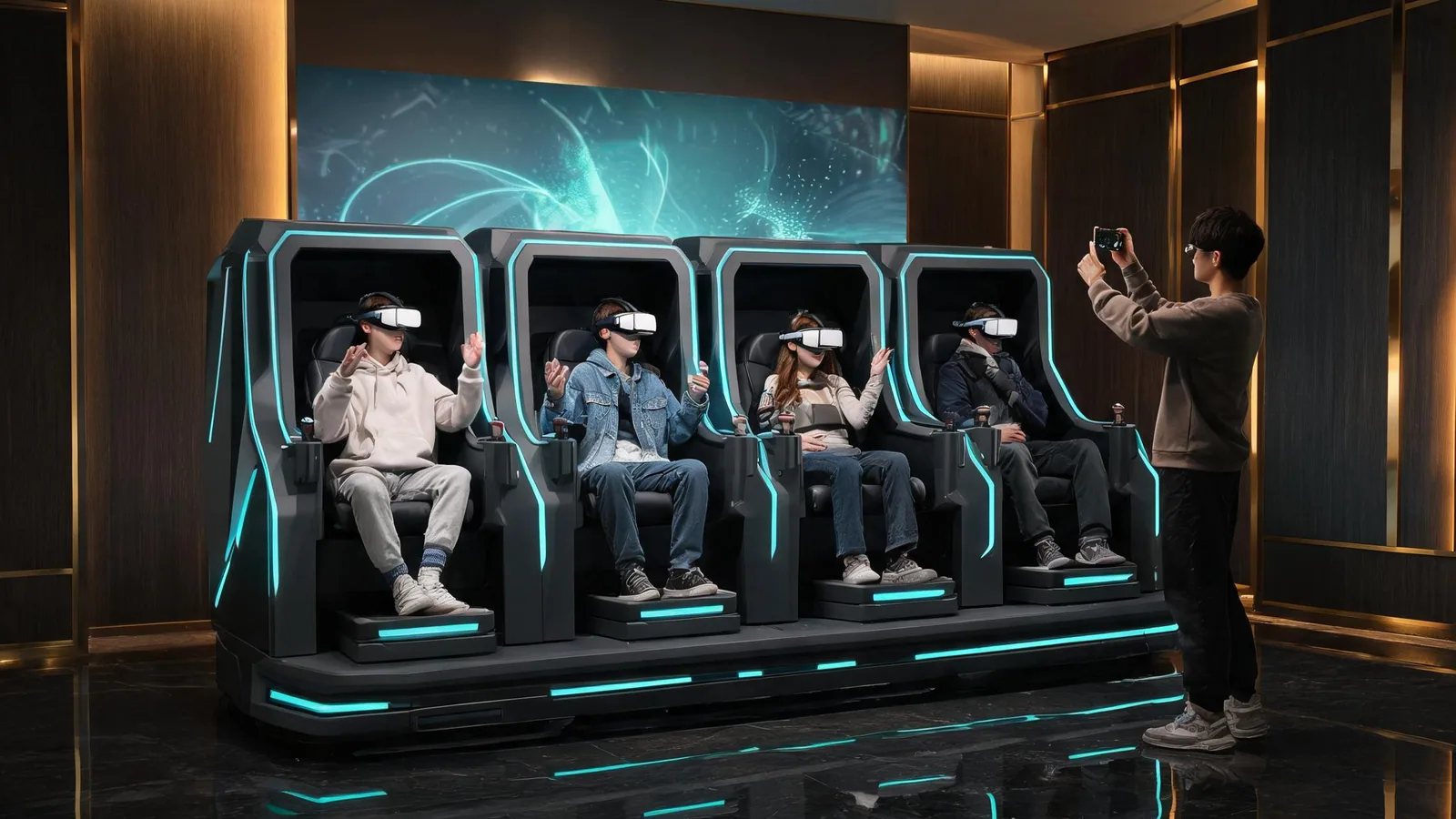
Why arcade-first, not flagship-first, for a new coast
Launching a flagship on a new coast is tempting: it makes a strong statement, it can support the full digital sports venue proposition, and it creates immediate brand recognition. But a flagship has hard constraints: investment of ¥100–200M+, 12–18 month lead time, a team that can operate multi-zone FEC, and proof that the local market can absorb that volume. These are the very things an investor does not yet have when entering a new coast.
A pure-arcade community store solves for the constraints in order. Investment is one-tenth to one-fifteenth of a flagship, equipment is standardized and can ship in weeks rather than months, the operating model is simpler and can be replicated from existing arcade playbooks, and the design focuses on one job only — building atmosphere on a small footprint. For the Virginia project, the investor chose to run the 950㎡ arcade on an East Coast timeline (design signed July 2025) in parallel with the Houston flagship (design started August 2025) — not because it was cheaper, but because it could open sooner and provide market data while the flagship was still in design.
The model hinges on one principle: use the small store to validate three things the flagship cannot — local footfall patterns at a community center or regional mall, price sensitivity for pure arcade gameplay (without VR or simulation add-ons), and the minimum viable party / group booking volume. Once these are known, the flagship investment becomes a calculated extension rather than a leap of faith.
- Flagship hard constraints: ¥100–200M investment, 12–18 month lead time, multi-zone FEC operating capability
- Arcade store solves: 1/10–1/15 investment, standardized equipment, simpler operations, fast market feedback
- Virginia model ran East Coast 950㎡ and Houston 8,500㎡ in parallel — market data before flagship opens
The 5-zone circulation that works in 950㎡
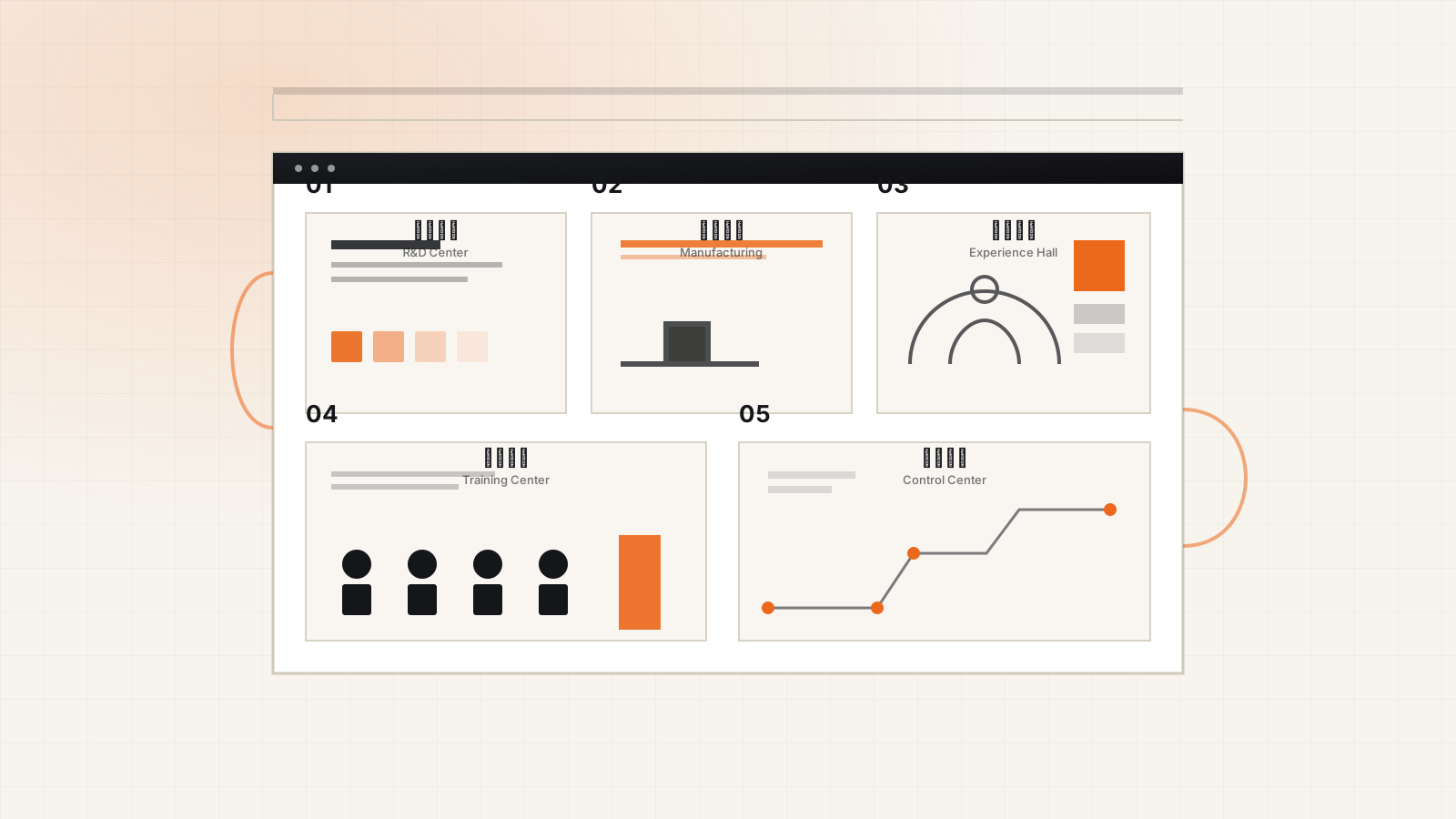
A 950㎡ space is too small for a multi-zone FEC with kids’ play, sports, VR, arcade and retail. But it is just enough for a pure-arcade circulation designed around five linked zones: arcade (170㎡, high cash flow from claw, gacha and prize machines), VR experience (85㎡, higher ticket), simulation racing and flight (75㎡, spectator appeal), party room (27㎡, minimum viable for U.S. community bookings), and service / storage / office (47㎡, logistics). The circulation places the arcade at entry, VR and simulation at the middle, and the party room at the back, so the path to a booking or event room naturally passes every machine.
The party room is the most instructive part of the design. The initial design pass had no party room at all — five zones were already tight in a 925㎡ footprint. The second pass (December 2025, local U.S. architect, imperial dimensions) added a 27㎡ party room plus 24㎡ storage and 23㎡ office. 27㎡ is small — the conventional minimum is 30–50㎡ — but the design team added it anyway because market data from U.S. arcade operators showed that birthday party bookings, even for a small room, drive 20–25% of monthly revenue and lift weekday traffic. For pure-arcade stores operating at community scale, the minimum viable party room is not optional.
Equipment density follows circulation too. 36 claw machines, 14 gacha machines, four cabinets and six premium machines fill the arcade zone; three VR pods and three ants boxes fill the VR zone; three racing simulators, two flight simulators and a dual-screen racing unit fill the simulation zone. Density is high, but the 150-amp U.S.-standard power supply and dedicated E.P. panel were specified in the design pass to handle peak draw without extension cables. Every piece of hardware was matched to a measured power budget before layout was finalized.
- Zones: arcade 170㎡ → VR 85㎡ → simulation 75㎡ → party 27㎡ → logistics 47㎡
- Party room flipped from "none" to "27㎡" after U.S. operator data on birthday booking volume
- Power budget: 150A E.P. panel, measured against equipment peak draw
Theme strategy: light over sets on small footprints
A physical theme set — props, scenic walls, themed flooring — is expensive at 300+㎡ but disproportionately expensive at 950㎡ because every square meter of set consumes floor area that could hold machines. The Cyber Galaxy theme therefore leans into lighting, projection and screens: neon strips, backlit panels, projection backgrounds, a central LED feature. The estimated theme cost is under 5% of total investment, compared to 15–20% for a flagship with physical props.
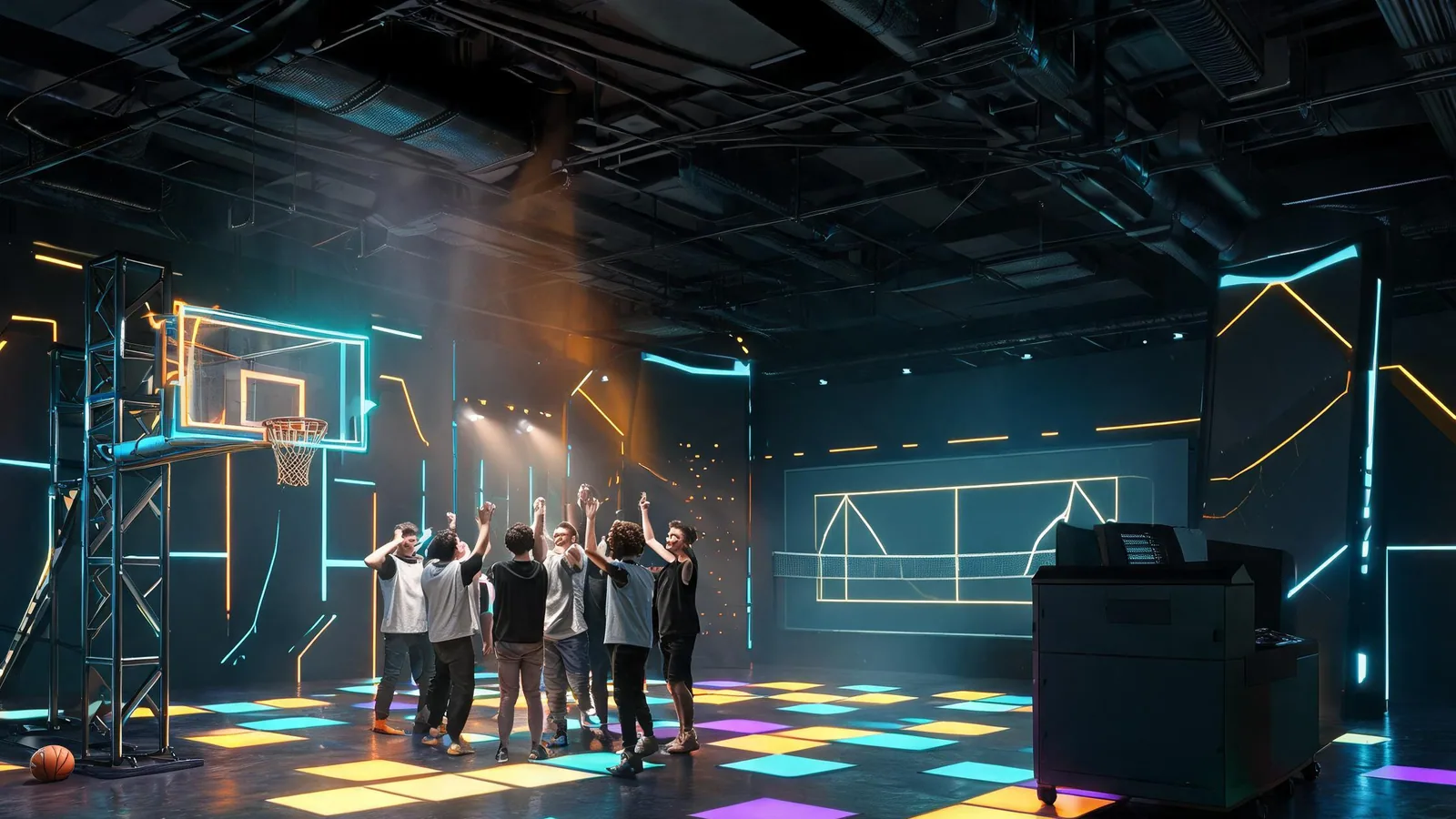
This is not a compromise — it is a purpose-built visual strategy. Smaller venues need strong visual impact at the entry; physical props would eat into the machine floor area that generates cash flow. The cyber-punk aesthetic was chosen over other themes because it works with light alone, it maps cleanly to arcade gameplay culture, and the color system (neon blue, purple, pink) reads clearly in dark space from the street — a critical asset for community-scale visibility.
- Theme cost target: under 5% of total investment (vs 15–20% for flagship physical sets)
- Cyber-punk visual: neon, backlit panels, LED feature — works with light, not props
- Street visibility: neon color system reads clearly in dark space
Unit cost: ¥2,541/㎡ is higher than mixed venues — and that is fine
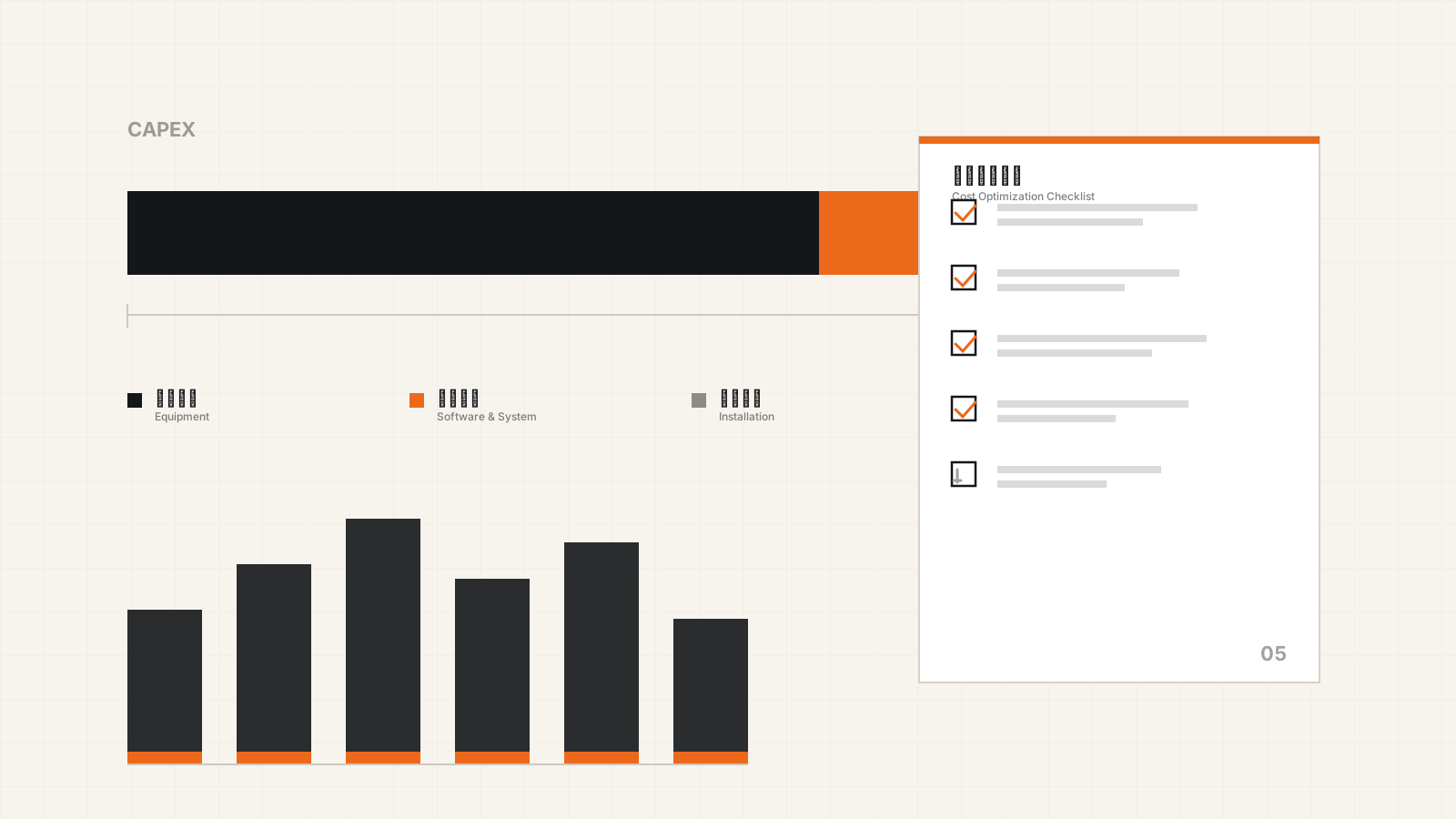
The equipment contract for the Virginia store totals ¥2,350,000 (not tax-inclusive, installation included). Dividing by the contract floor area of 925㎡ gives ¥2,541 per square meter of arcade equipment. This is 15–25% higher than the unit cost of a mixed-zone FEC, which averages ¥2,000–2,200/㎡ across all zones — including the VR, simulation and digital sports layers.
The premium is justified by equipment density: the arcade zone carries nearly all of the store’s machines, and arcade machines are a higher-turnover, higher-maintenance asset than projection or sports equipment. The unit cost is not a signal to simplify the mix — it is the price of a store whose core value proposition is "dense, familiar, profitable arcade machines plus VR and simulation add-ons".
The payment structure follows standard overseas arcade procurement: 30% at contract signing (¥705,000) to trigger production, 70% before shipment (¥1,645,000). The warranty covers motors, power boxes, mainboards, projectors and mechanical structure for one year; consumables are excluded; response SLA is three days on-site, one day online. The contract is governed by Guangzhou Arbitration Court — a known clause for overseas projects where the equipment is sourced from China.
- ¥2,541/㎡ arcade equipment (15–25% premium over mixed FEC)
- Payment: 30% signing, 70% before shipment
- Warranty: 1 year on main components, consumables excluded
- Guaranteed equipment chain: Hong Kong Citibank account, 3–5 days post-final-payment shipment
Equipment and supply chain: from the 30% deposit to power-on
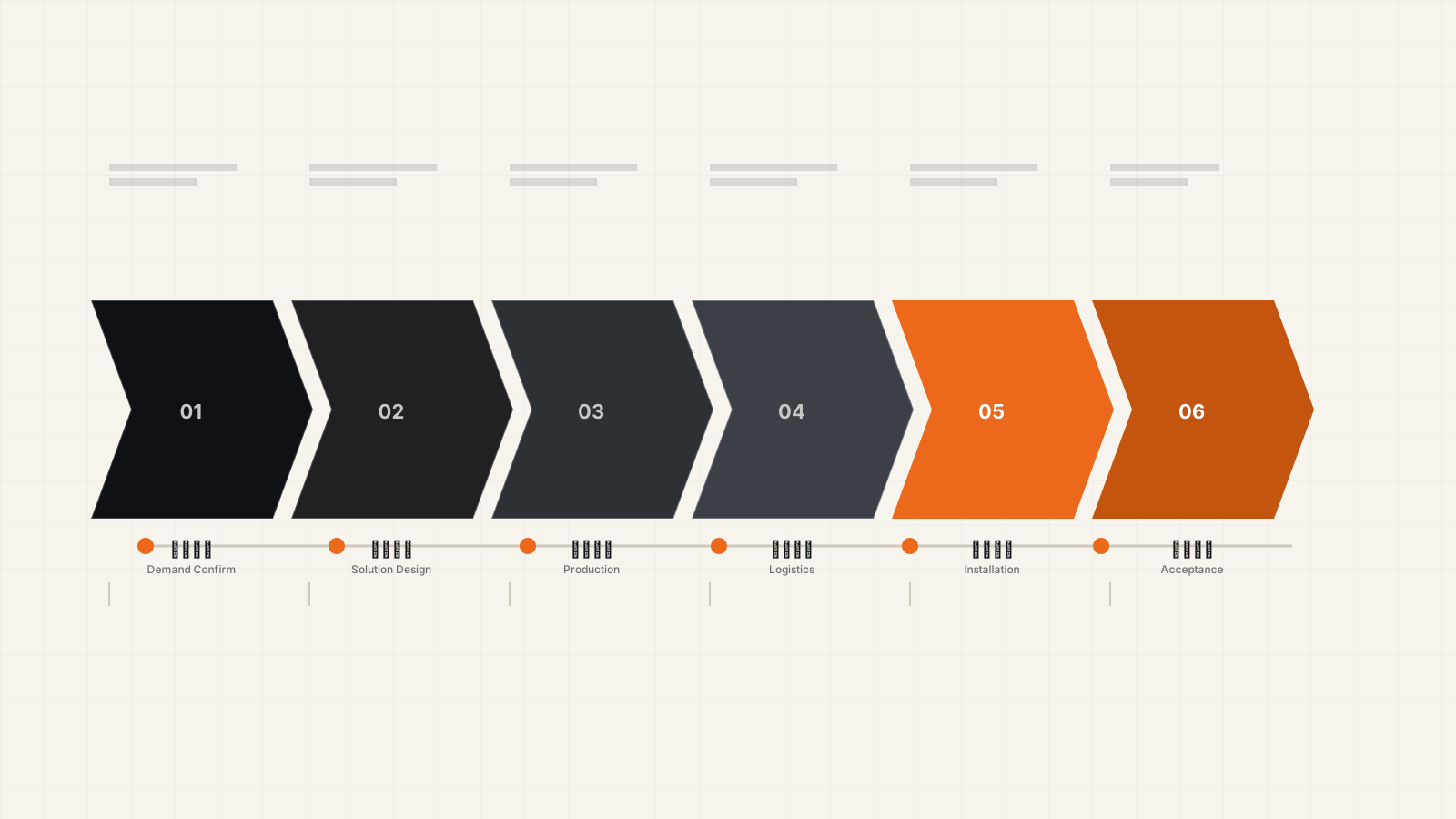
Delivering an arcade store is not "order, then receive". It is a chain with hard dependencies: design freeze locks the machine list and positions → the 30% deposit starts production → ocean booking and import documents are completed inside the production window → the balance payment triggers shipment within 3–5 days → customs clearance and inland transport → on-site installation, commissioning and power-on acceptance. A delay at any link pushes every later link, and the opening date does not move with it.
The Virginia project treated the equipment list as a design deliverable rather than a procurement annex. When the five-zone circulation was frozen, machine models, quantities, power draw and footprint were already in the same drawing set: 36 claw machines, 14 gacha machines, four cabinets and six premium machines; three VR pods and three ants boxes; three racing simulators, two flight simulators and one dual-screen racing unit. That is what allowed factory scheduling, container volume estimates and the site’s 150A E.P. panel capacity to be locked at the same time — instead of discovering after delivery that the power was not there.
The handover acceptance point is power-on, not arrival. Arrival only proves logistics finished; power-on plus continuous running proves the equipment is usable. That is why the contract puts installation and commissioning inside the equipment scope (installation included, tax excluded) and sets the response SLA at three days on site and one day online, with a one-year warranty on motors, power boxes, mainboards, projectors and mechanical structure, excluding consumables. The real value of these terms shows up in the first month of operation — the period with the highest concentration of equipment issues — where SLA response days directly determine how long an outage costs you.
- Chain sequence: design freeze → 30% deposit and scheduling → ocean freight and customs → shipment 3–5 days after balance → installation and commissioning → power-on acceptance
- Equipment list written into the design drawings (model, quantity, power, footprint) and locked together with the 150A E.P. panel
- Acceptance is power-on and continuous running, not delivery receipt
- SLA: three days on site, one day online; major components warranted for one year
Portfolio logic: flagship and community store in the same portfolio
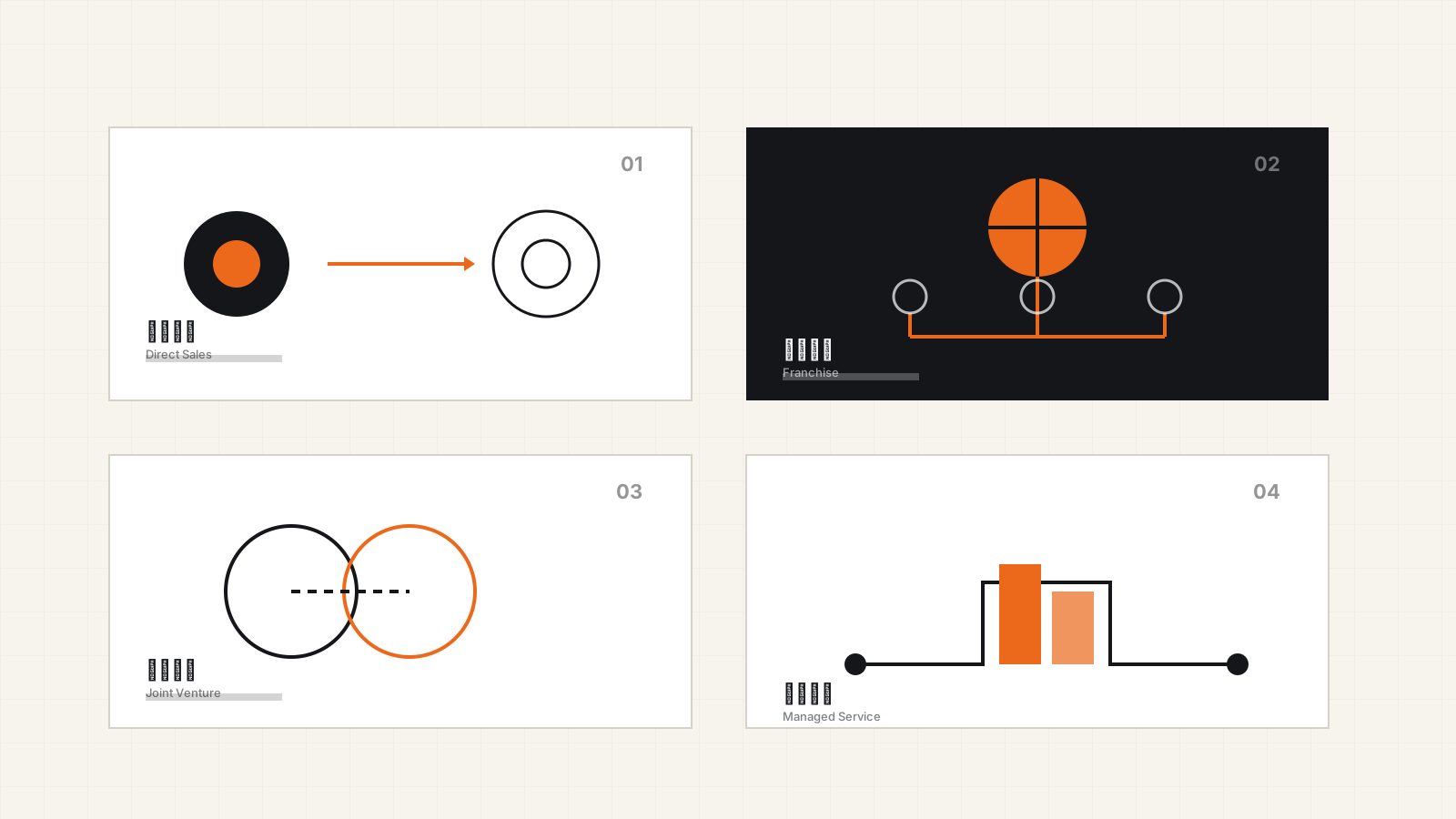
The Virginia store and the Houston flagship are both owned by MANYUAN GROUP LCC, a Delaware-registered entity with a Houston address. This is not accidental — a single portfolio holding two complementary venues across two regions creates three effects. First, risk diversification: flagship draws one audience (families, multi-zone FEC), arcade store draws another (young adults, community birthday parties). Second, capability ladder: the arcade store tests equipment supply, design localization and operating SOPs; the flagship scales those tested capabilities. Third, brand coverage: an East Coast arcade store and a South Coast flagship give national coverage without needing a coast-to-coast flagship budget.
Not every investor has the capacity to run both a flagship and a community store simultaneously. The portfolio model works best for investors with strong cash flow and a team that can split geographically — or for investors who want to sequence a flagship only after the arcade store has proven the market. For investors entering a single metro, the arcade-first path is still the right model; the portfolio ladder just adds a natural second step once the first validates.
- Risk diversification: flagship and arcade draw different audience segments
- Capability ladder: arcade tests supply, design, SOP → flagship scales
- Geographic coverage: East Coast community + South Coast flagship = national reach
Permits and compliance: six gates before a U.S. store can open
The equipment contract only covers the commercial side; whether the doors open is decided by local regulators. A U.S. store touches at least six categories: entity and tax (company registration, tax ID, sales tax permit), city business licence (issued by the city, not the state), building and electrical permits (including the 150A service upgrade and E.P. panel work), fire approval (occupant load, egress paths, flame-retardant finishes), sign permits (many cities regulate neon and brightness separately), and prize redemption plus minor-protection rules.
Prize redemption is the most under-estimated item. Claw and redemption machines are legal in most U.S. states, but what can be won, how it is redeemed and whether it can be converted to cash is set by state law; some states are stricter on redemption value caps, ticket exchange and what counts as gambling-like. A community store also has a high share of minors, so operating hours, supervision requirements and staff scripts must be written into the SOP under local rules. Food and beverage, if offered, needs a separate food-service licence and health inspection.
The Virginia project handed compliance coordination to a small local team rather than judging it remotely from China: the local architect produced imperial-unit drawings and filed under local code, and that local coordination sits inside the ¥46,250 design fee (¥50/㎡, 50% creditable against equipment). For an investor, compliance is not a one-off cost — it is the biggest variable on the opening schedule. A permit that arrives two weeks late means opening two weeks late, while rent and payroll keep running.
- Six categories: entity and tax, city business licence, building and electrical, fire, signage, prize redemption and minors
- Prize rules are set by state, not federally; check redemption value caps and ticket rules first
- Food and beverage needs a separate food-service licence and health inspection
- Compliance is the biggest schedule variable: a late permit means rent and payroll with no revenue
How many people a 950㎡ arcade needs — and how to train them
A pure-arcade store has a simpler organisation than a mixed FEC, but not fewer roles: store manager / shift lead, technical maintenance, front desk and redemption, party and group hosting, cleaning and security. What changes is the boundary of each role — no sports coaches, no zone-by-zone operations, no class schedules, so one person covers more surface.
On a two-shift pattern, a planning range of 8–15 full-time equivalents is typical, depending on opening hours, weekend peaks and party volume. What determines productivity is not headcount but who stands where and when: the entry redemption counter must always be staffed, someone must complete set-up and equipment checks 30 minutes before a party starts, and maintenance must finish a check round before opening rather than waiting for a repair ticket.
Training should centre on three things rather than the equipment manual: redemption rules (every employee must explain prize value and exchange method identically), equipment checks (daily power-on self-test, consumable replenishment, first-line handling of common faults) and the party flow (timeline, circulation, parent communication). The Virginia equipment contract includes installation and commissioning, so the on-site training during handover is the only window when the factory’s people are still in the building — build the check sheet and fault tiers during those days and you save a great deal compared with patching it after opening.
- Roles: store manager / shift lead, maintenance, front desk and redemption, party hosting, cleaning and security
- Planning range: 8–15 full-time equivalents on two shifts, adjusted for hours and party volume
- Headcount matters less than where each person stands at peak
- Train three things: redemption rules, daily checks, party flow — do not waste the handover training window
What arcade-only cannot do, and when to expand
A pure-arcade community store has clear limits. It cannot hold a kids’ play or soft-play zone — that needs 300–700㎡ of dedicated floor area that the arcade layout cannot give up. Family weekday traffic will always be weaker without a designated kids’ area. A pure arcade is also more vulnerable to equipment homogenization: neighbors in the same mall can copy claw, gacha and cabinet machine configurations and compete on prize cost.
Expansion triggers are not arbitrary — they are data points. If the arcade store reaches 80% capacity on weekend days and weekday group bookings exceed six per month, it has the traffic to justify adding a digital sports zone on a future lease renewal or a nearby second store. If repeat member visits hit 30–35% monthly and the team has capacity for two operating locations, a second arcade store in the same metro is faster than waiting for a flagship.
The Virginia store model is intentionally conservative about these expansion triggers. It was designed as a 950㎡ pure arcade and signed as a ¥2.35M equipment contract — not a "future-proof" store with spare capacity for unbuilt zones. That conservatism is its strength: each decision (party room, theme level, equipment mix) is made against measured trade-offs, not hypothetical future scenarios.
- Cannot hold kids’ play zone (needs 300–700㎡ that arcade layout cannot release)
- Weekday family traffic weaker without designated kids’ space
- Vulnerable to neighbor equipment copying — prize cost is the only differentiator
- Expansion triggers: 80% weekend capacity + 6+ weekday groups/month
Six metrics to watch in year one — and when to review them
The advantage of a small store is clean data: one zone, one price set, one circulation path, so any swing can be traced to a specific cause. In year one, watch only six metrics and review them monthly: weekend capacity utilisation, weekday group and party bookings, monthly member repeat rate, redemption cost as a share of arcade revenue, revenue per machine per day, and equipment downtime hours. Few metrics are what makes weekly review actually happen.
The reference values follow the operating figures already cited in this article: 80% weekend capacity, more than six weekday group bookings a month, and 30–35% monthly member repeat. When all three hold, traffic and retention are both strong enough to support expansion. Redemption cost share and revenue per machine must be read as a pair — making prizes cheaper lifts margin in the short term but pushes down both repeat visits and per-machine revenue, so reading only one of them leads to the opposite conclusion.
For cadence, run an "assumption calibration" once a quarter: which pre-opening assumptions did the data overturn (for example, expecting weekday families when the actual traffic is students and young adults), which machines are productivity black holes, and whether the party room really holds its 20–25% revenue share. Year one is the only chance to look at the store without a history to defend; from year two onward, every judgement is biased by the first year’s momentum.
- Six metrics: weekend capacity, party bookings, member repeat, redemption cost share, revenue per machine per day, downtime hours
- Expansion threshold: 80% weekend capacity + six group bookings a month + 30–35% repeat
- Read redemption cost and per-machine revenue as a pair; do not trade prizes for short-term margin
- Calibrate assumptions quarterly; year one has no history to defend
Checklist: 5 things to verify before signing a 950㎡ overseas arcade contract
An arcade store is small enough to skip a 150-page feasibility study — but the five checks below have been the difference between a Virginia-style project that moves to design and contract in 12 weeks and projects that stall for months. None is a financial model — they are operational verifications that determine whether the contract you sign will deliver a store that opens on schedule.
First: equipment supply lead time from the factory — verify actual days between production start (30% payment received) and shipment readiness, not a quoted delivery window. Second: power budget — list every machine’s peak draw in the design pass and confirm the site E.P. panel rating with the landlord, not just the architect. Third: party room minimum — confirm that 27–30㎡ is the minimum your booking system and local party market need. Fourth: local compliance — verify redemption/prize rules, minor protection and food/beverage licensing for your specific town or jurisdiction. Fifth: opening date — lock in the installation window before signing, and include penalty clauses that trigger if the venue is not power-ready when equipment ships.
- Equipment supply lead time: actual factory days, not a quoted window
- Power budget: per-machine peak draw verified against site E.P. panel rating
- Party room minimum: confirm 27–30㎡ booking feasibility with local operators
- Local compliance: redemption rules, minor protection, F&B licensing — by town
- Installation window locked in contract; venue power-readiness triggers penalty clauses
FAQ
Is arcade-first the right model for every overseas market?
Not universally. Arcade-first works best when the investor has limited local operating history, the market is already familiar with arcade-style gameplay, and there is no regulator barrier to prize or redemption machines. It is less suited for markets with strict gaming-machine licensing, or where digital sports venues already have strong local competitors. Market-specific data should precede model choice.
Why not open a 2,000㎡ mid-size venue instead of a 950㎡ pure arcade?
A mid-size venue still requires two or three zones (sports, arcade, VR) and the operational complexity that comes with them. A 950㎡ arcade store operates one zone, with simpler staffing, simpler equipment supply and simpler SOP — all of which matters more when the team is new to the market. Expansion to mid-size or flagship should follow arcade-store data, not precede it.
How much working capital should be reserved beyond the equipment contract?
Beyond the equipment contract, reserve the design fee, shipping and import fees, on-site fit-out (lighting, power, flooring, signage), insurance, and the first three months of operating capital. The Virginia project had a ¥46,250 design fee (¥50/㎡, 50% creditable against equipment), plus a power supply upgrade and a small local team for permit coordination. These add up to roughly 15–20% of the equipment contract. Never sign an equipment contract without the working capital reserve secured.
Does a pure-arcade store need a party room?
In the U.S. market, yes — even a 27㎡ small room. Birthday parties, team celebrations and community group bookings account for 20–25% of monthly arcade revenue and lift weekday traffic, which would otherwise be nearly empty. A store that skips the party room has a direct ceiling on its revenue model. Other markets may differ — Japan and Southeast Asia have different group-booking patterns — but in North America the room is non-negotiable.
What if the arcade store’s opening data says the market wants a flagship immediately?
That is not a failure of the arcade-first model — it is the point. The whole reason for a 950㎡ store is to collect data that reveals whether the market wants a flagship, what the flagship should prioritize, and how much capital it needs. If the data validates a flagship, it is a calculated move with proven risk parameters; if it does not, the investor has not spent flagship money to find out.
How long should we allow for ocean freight and customs from China to the U.S.?
As a planning convention, a full container from a major Chinese port to the U.S. East Coast takes roughly 30–45 days at sea; adding booking, export declaration, destination clearance and inland transport, allow 6–8 weeks door to door. "Shipment" in the contract means ready to load, not arrived, so the countdown to opening should carry separate buffer for clearance and trucking rather than treating the ocean leg as the whole timeline. The Virginia contract specifies shipment within 3–5 days of the balance payment, which is a clean starting point for a backward schedule.
What licences does an arcade need in the United States?
At least six categories: entity and tax registration, a city business licence, building and electrical permits (including the service upgrade and panel work), fire approval, a sign permit, and prize-redemption plus minor-protection rules. Prize rules are written by state rather than federally, and redemption value caps and ticket rules differ; selling food or beverage adds a separate food-service licence and health inspection. All of these sit on the critical path to opening, so start them before signing the equipment contract.
How many staff does a 950㎡ pure-arcade store need?
On two shifts, a planning range of 8–15 full-time equivalents is typical, depending on opening hours, weekend peaks and party volume. Roles cover store manager / shift lead, maintenance, front desk and redemption, party hosting, cleaning and security. More important than headcount is positioning at peak: the entry redemption counter always staffed, set-up and equipment checks finished 30 minutes before a party, and a full check round before opening. The handover training window is the best time to build the check sheet and fault tiers.
Which year-one metric is most often misread?
Revenue per machine per day. It looks like the most direct number, but without reading redemption cost share and monthly member repeat alongside it, it leads to the wrong conclusion — cheaper prizes lift per-machine margin in the short term while pushing down repeat visits and long-term revenue. Put revenue per machine, redemption cost share and member repeat on one sheet, then use weekend capacity and party bookings to judge whether the store has a traffic problem or a retention problem; the two have completely different fixes.
RELATED
 From One Venue to Many: The Replication Model
 Indoor Digital Sports Venue Investment and Opening Guide
 Digital Sports Equipment Procurement and Selection Guide
 Venue Space Planning and Circulation Design
 Venue Opening Preparation and Soft Launch
 Arcade & FEC Digital Transformation Guide
 Group Events and Party Bookings Playbook
 Digital Sports Venue Investment Guide (short form)
 Digital Sports Equipment Selection Guide (short form)
GET ADVICE
Share your market and footprint, get a store model
Tell us your target country or region, the planned floor area and whether this is your first venue — we will walk you through arcade-first vs mixed-zone trade-offs and reference the Cyber Galaxy Virginia model’s design, contract and power budget.
2026-11-14