
SINGLE-VENUE MODEL · STANDARDISATION · PACING
From One Venue to Many: The Replication Model
Once the first venue works, how should the second and third be opened? This article breaks down the replication model for digital sports venues: the four transferable modules, the site pipeline, group purchasing leverage, design and power standardisation, operating SOPs, manager bench depth, capital pacing, cross-venue data definitions and the three red flags that should stop expansion — using the parallel Virginia 950㎡ arcade and Houston 8,500㎡ flagship as a real reference.
The decision to open a second venue usually arrives not when the first one becomes profitable, but when its operating data becomes predictable. Those two moments look close and are far apart: a venue that stays profitable because the owner is on site every day has not yet been proven as a model another person can run. The precondition for replication is not positive cash flow — it is that the critical actions have been written down, executed by someone other than the founder, and shown to produce repeatable results.
This article is about replication itself: what to copy, in what order, what must be unified, what must stay local, and which signals should stop the process. The reference is a pair of parallel projects from the same investor — a 950㎡ pure-arcade store in Virginia and an 8,500㎡ flagship in Houston. They are not finished examples of replication, but the first validation of one capability at two very different footprints.

Precondition: turn the single venue into a measurable model
Whether a venue can be replicated depends on three questions having definite answers: who owns each critical action, what the standard for that action is, and how deviations get corrected. If only the founder can answer those three, the second venue is not a replication — it is another startup, except this time the founder has to run two at once.
Measurable does not mean installing a wall of dashboards. It means every critical action maps to a number that a non-founder can read: equipment uptime, redemption cost as a share of revenue, weekday group bookings, member return rate, labour cost per square metre. None of these require a complex system, but each needs a fixed definition, a fixed cadence and a named owner. Data without agreed definitions is more dangerous than no data, because it creates the illusion of management.
Before design was signed, the Virginia project already had a defined five-zone circulation and equipment list, so its model could be described before opening: how many square metres, how many machines, how much power capacity, how many roles, how large the party room. That describability is the foundation of replication — a venue that can only be described through on-site intuition cannot be handed to a second person.
- Three questions: who owns it, what is the standard, how are deviations corrected
- Every metric needs a fixed definition, cadence and named owner
- Before opening, describe the venue by area, machine count, power capacity and roles
What you replicate is four modules, not the venue
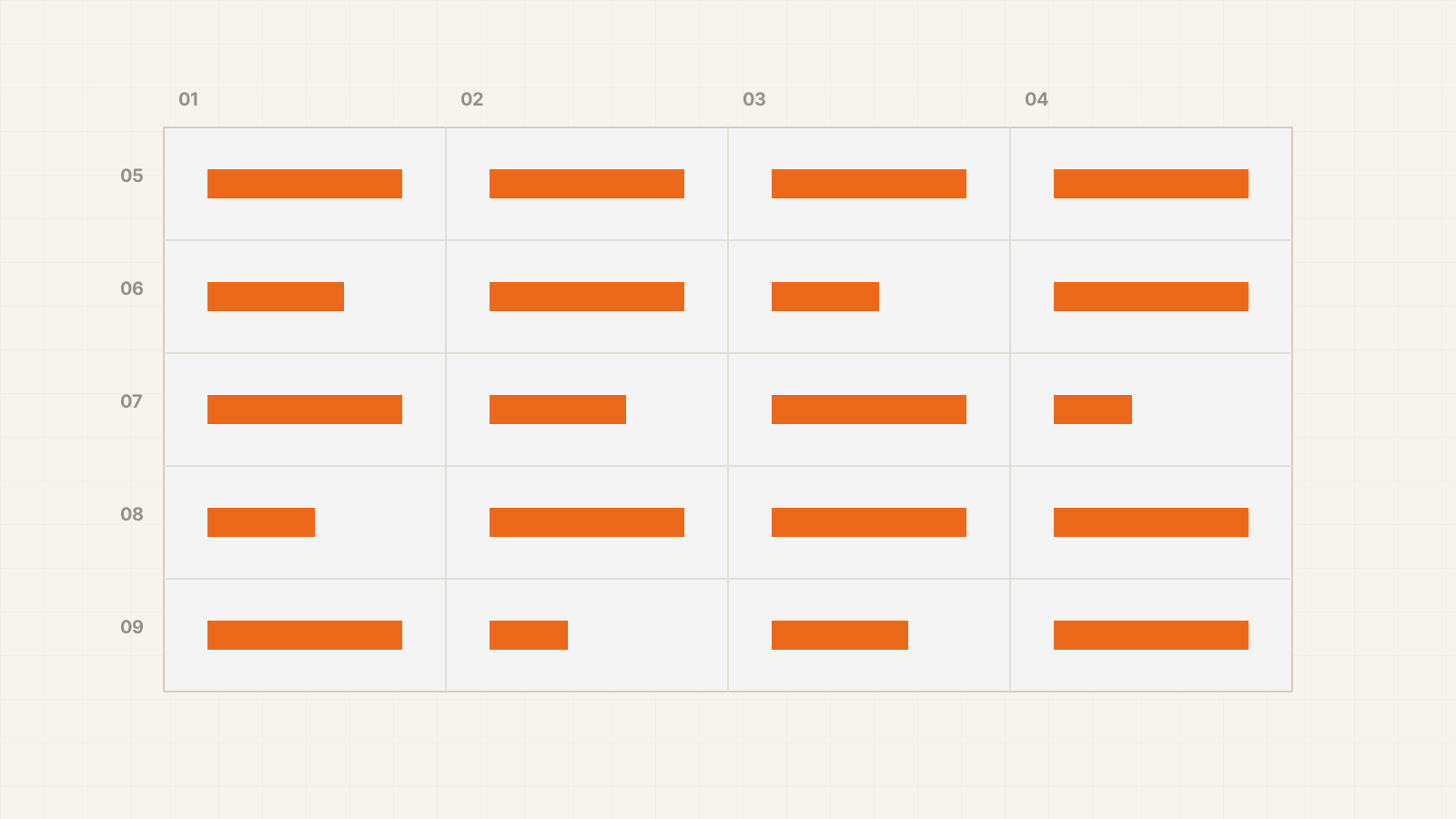
Copying a whole venue almost always fails, because a venue is a product of local conditions: ceiling height, column grid, fire compartments, surrounding demographics and rent structure all differ. What can be replicated are four modules — design, equipment, operations and training. A venue is just those four modules combined inside a specific property.
The design module answers how to lay out: circulation principles, zone ratios, power capacity calculation, minimum party room size. The equipment module answers what to buy: category structure, anchor-to-traffic-driver ratio, spare parts list, acceptance standards. The operations module answers how to run: scheduling, inspections, redemption, event calendar, complaint handling. The training module answers how to teach people: role handbooks, ramp-up time, assessment points.
The four modules mature at different speeds, so the expansion pace should differ too. Design and equipment usually standardise first because suppliers and drawings define them; operations and training are hardest because they depend on people. Many chains fail at the second or third venue not because they cannot open stores, but because they opened before operations and training were ready.
- Design: circulation, zone ratios, power algorithm, minimum party room size
- Equipment: categories, anchor mix, spares, acceptance standards
- Operations: scheduling, inspections, redemption, events, complaints
- Training: role handbooks, ramp-up time, assessment points
The site pipeline: from a single point to a corridor
The most common mistake with a second venue is opening a completely different store in a completely different city. A more stable approach is to build a corridor first: two or three venues in the same regional market that share warehousing, maintenance, supervision and marketing resources. A corridor is not about geographic proximity — it is about being inside one management radius, where a supervisor can visit two sites in a day, a spare part can arrive in two days and event materials can be shared.
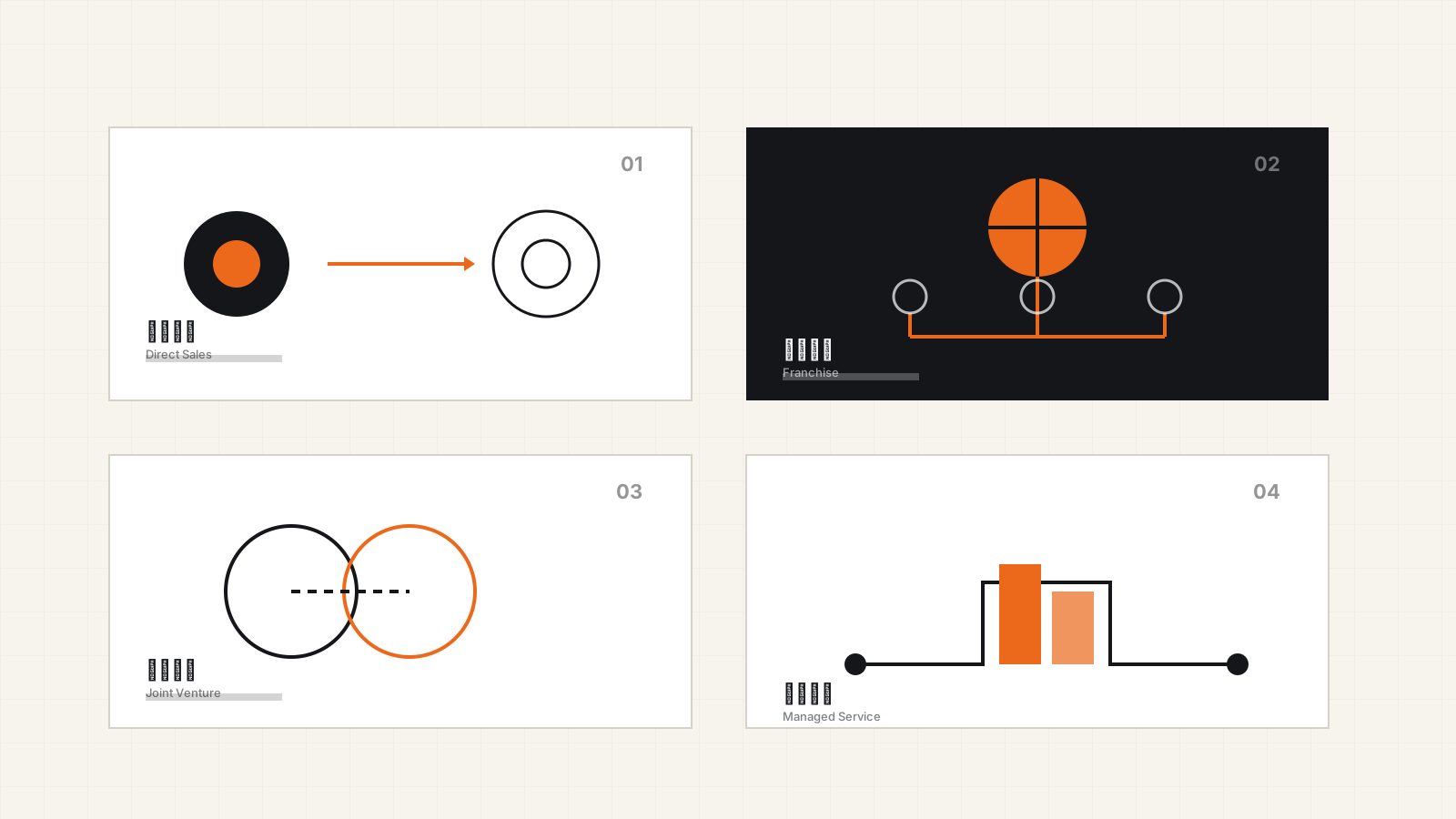
Site criteria should also shift from “is this unit good” to “which of our store types does this unit belong to”. The same model usually needs two or three formats: a community store for cash flow and density, a flagship for brand and multi-zone experience, and an intermediate format in between. Define the format first, then search for the unit — not the other way round.
The parallel Virginia and Houston projects are a real reference: a 950㎡ East Coast arcade and an 8,500㎡ South Coast flagship were designed at the same time but with completely different roles — one validating community footfall and price sensitivity for pure arcade play, the other validating the full multi-zone FEC proposition. They share one equipment supply chain and one design capability, but not one format.
- Build a corridor: 2–3 venues inside one management radius sharing storage, maintenance, supervision and materials
- Define formats first: community, intermediate and flagship solve different problems
- One capability can serve several formats — do not copy the format along with it
Group purchasing: how multiple venues change the negotiating structure
The supply chain effect of multiple venues is not simply “buy more, pay less”. Three things actually change: order predictability, spare-part sharing, and how deeply a supplier is willing to commit. A single venue presents an uncertain order; a multi-venue buyer presents a production plan, which affects lead time, price and after-sales priority.
Spare-part sharing is the most overlooked benefit. Claw machines, gacha machines, VR pods and racing simulators each have wear parts. A single venue must hold stock for every category; a multi-venue group can centralise inventory at a corridor hub and transfer on demand. This lowers the capital tied up in each store and raises uptime, because waiting for a part becomes a two-hour drive instead of a supplier shipment.
Group purchasing has a cost: the higher the standardisation, the less room a single venue has for local needs. The practical compromise is to standardise categories and anchor models, not every individual machine. Keeping a 10%–20% local flexibility allowance for site constraints, local preferences or temporary events is common practice.
- Multiple venues change predictability, spare-part sharing and supplier commitment
- Central spare inventory plus in-corridor transfer shortens downtime
- Standardise categories and anchor models, keep a 10%–20% local allowance
Design standardisation: a reusable drawing and power template
The goal of design standardisation is not to make every venue look the same, but to make every design start from something rather than nothing. Reusable assets include a baseline zone-ratio table, a circulation checklist, a power capacity worksheet, standard lighting and theming approaches, and the minimum party room size and equipment set. Once written, the design cycle for a new store shortens noticeably.
Power is the single most worthwhile item to standardise. The Virginia store specified a 150-amp U.S.-standard supply and a dedicated E.P. panel during design, calculated from each machine’s peak draw rather than rule-of-thumb estimates. In a multi-venue rollout, that worksheet — per-machine draw, zone load, total capacity, panel specification — can be reused directly, so no store has to relearn it.
Standardisation must still leave room for local theming. Structure and MEP should be unified; the visual layer can be localised. The same circulation and power layout can produce cyber-punk, retro arcade or bright family aesthetics. Writing down clearly what cannot change and what can is the most important page in the design standard.
- Reusable: zone ratios, circulation checklist, power worksheet, theming approach, party room standard
- Calculate power from per-machine peak draw, not rules of thumb
- Unify structure and MEP; allow visual theming to localise
Operating SOPs: the minimum consistent set
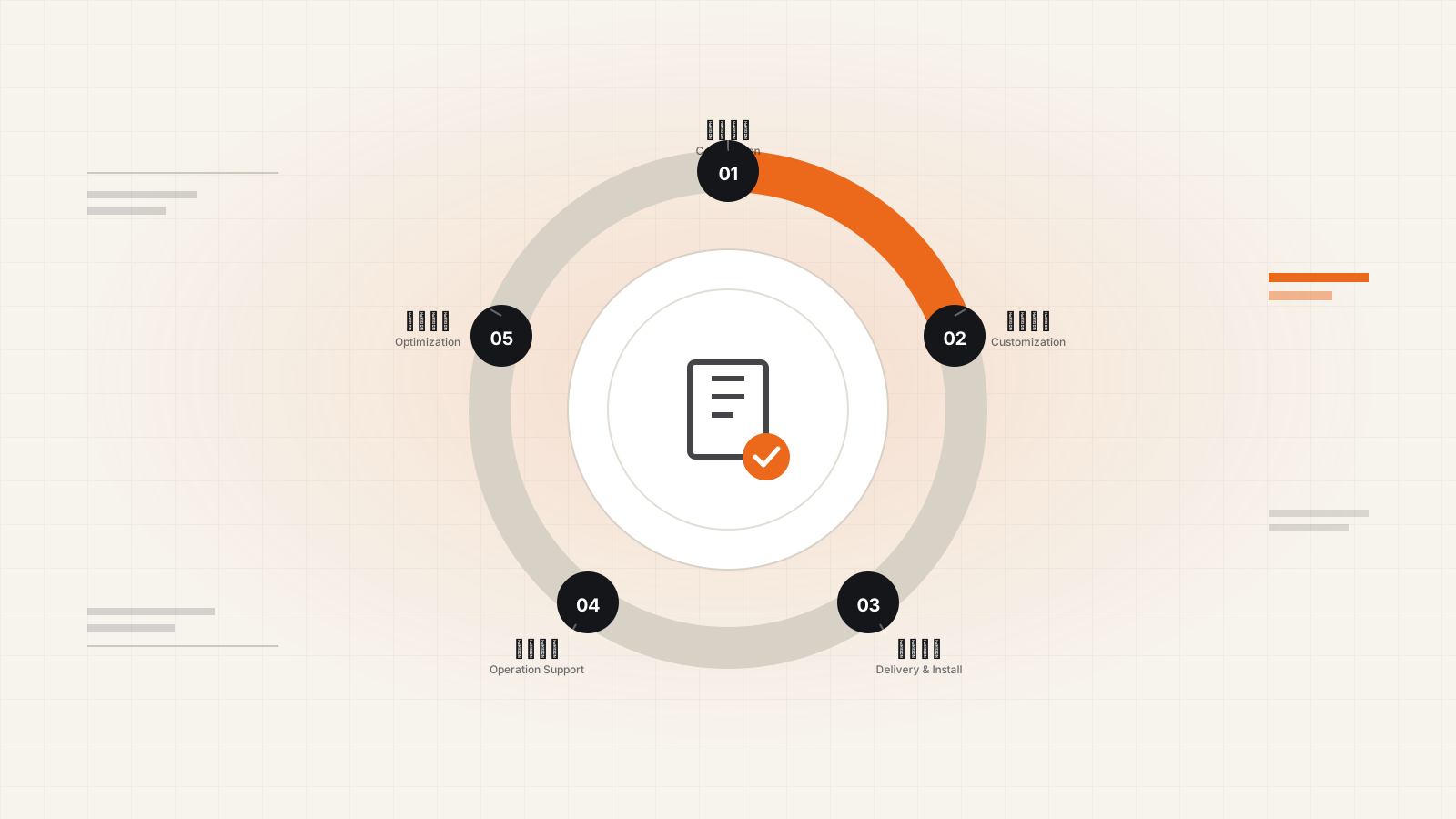
Operating standardisation tends to go to extremes: either nothing is unified and every store runs its own way, or a thick manual is written that nobody reads. The effective approach is to define a minimum set — the actions where inconsistency directly damages revenue, safety or brand must be unified; everything else is left to the store manager.
The minimum set usually includes opening and closing checks, equipment inspection and repair requests, redemption and prize restocking, party hosting, complaint escalation, daily cash and book closing, and safety emergency procedures. Their common trait is that getting them wrong produces an immediate visible consequence. Scheduling details, community messaging and event creativity, by contrast, should be allowed to vary locally.
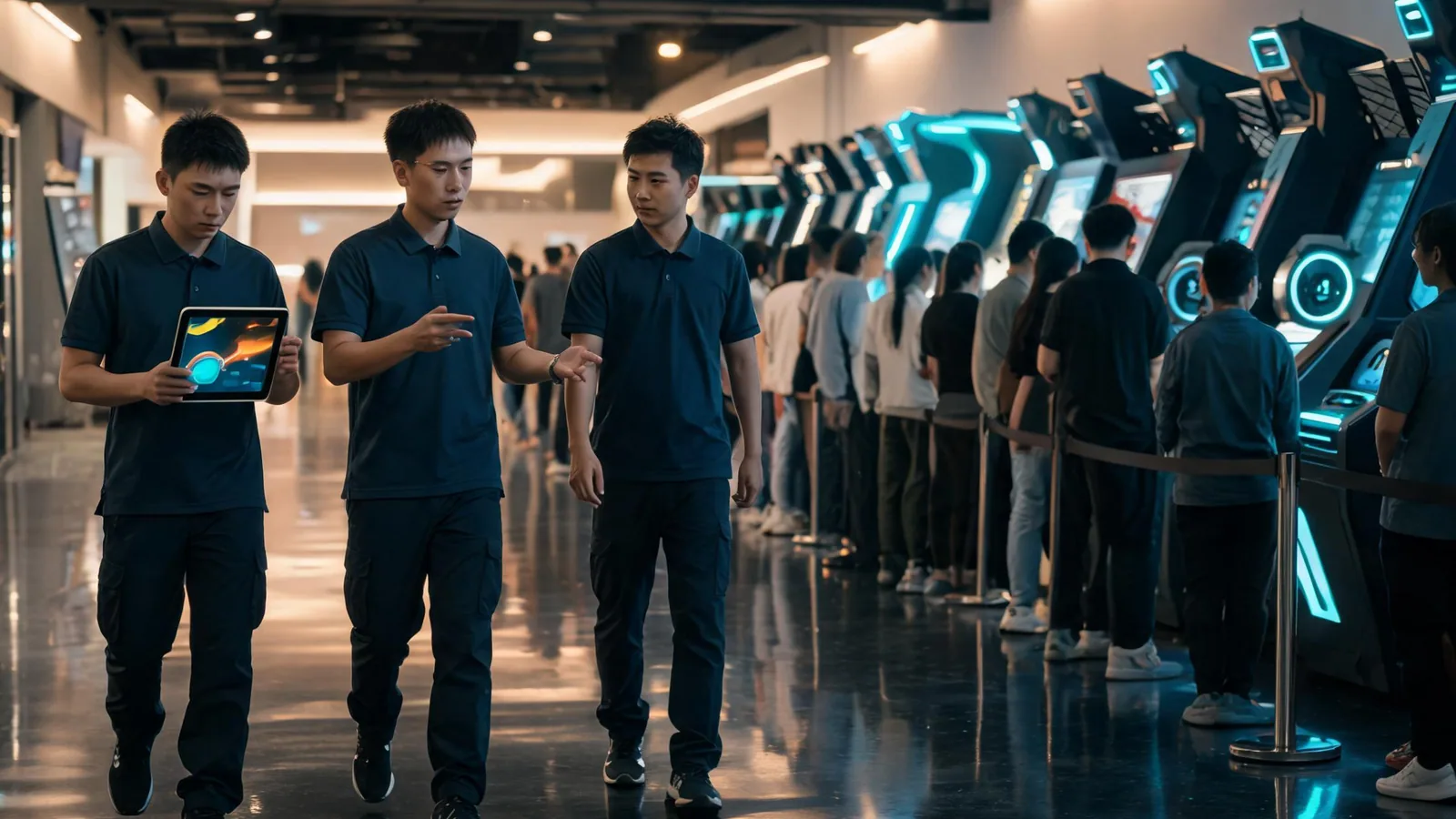
Format matters as much as content. Illustrated steps plus checklists plus short videos get executed far more reliably than text-only manuals. Every SOP should be verifiable on site: a supervisor should not have to ask whether the process was followed — they should be able to look at a signed checklist and a continuous inspection log.
- Must unify: opening/closing, inspections, redemption, parties, escalation, daily close, emergencies
- Allow local variation: scheduling detail, community messaging, event ideas
- SOPs must be verifiable on site: signed checklists, continuous logs
The manager bench: slower than the equipment
The ceiling on expansion speed is usually not capital and not available units — it is the number of managers who can run a store independently. Equipment can arrive in months, fit-out can finish in ten weeks, but a competent store manager needs to have lived through a full cycle inside a mature venue: peak season, low season, events, complaints, equipment failures, staff turnover. That cycle is hard to compress.
Hence the common practice of building the bench one store ahead: when planning the third venue, the second should already have an assistant manager ready to run a store; when planning the fourth, the third should have the same. A bench is not a training course — it is delegated authority. Let candidates own scheduling, redemption and complaints for a period inside a real store, and have the current manager give a verifiable assessment.
Cross-region expansion amplifies the problem. Same-city transfers are relatively easy; cross-state or cross-country moves involve visas, family and cultural adaptation, and take longer. Virginia and Houston sit on opposite sides of the country, which by definition means two local teams rather than one team flying back and forth — an organisational question that must be answered before replication begins.
- Expansion ceiling is set by the number of managers who can run a store independently
- Build the bench one store ahead
- A bench is delegated authority plus verifiable assessment, not classroom hours
Capital and pacing: how many, and how far apart
Multi-venue expansion most often goes wrong on pacing: either so conservative that the window closes, or so aggressive that cash flow breaks. A practical test is the overlap of three capabilities — new-store delivery, existing-store operations, and head-office support. If any one is overdrawn, expansion should slow down.
There is no universal interval, but there is a structural constraint: a new store typically passes through design, construction, equipment installation, soft opening and ramp-up. During that period the existing store must run itself and still supply people and capital. If the existing store still depends on the founder every day, opening two new stores at once will almost certainly get out of control.
Capital should include a separate buffer for the second store rather than reinvesting all of the first store’s profit. Equipment contracts, fit-out, deposits, first spare-parts stock and three months of operating capital can each overshoot; holding a working-capital reserve equal to roughly 15%–20% of a single store’s equipment contract is a common conservative practice.
- Test the overlap of three capabilities: new-store delivery, existing operations, head-office support
- The existing store must be self-running before it can support a new one
- Reserve working capital for the second store; do not divert the first store’s profit
Metric definitions: making two venues comparable
Whether two venues can be compared depends on whether the definitions match. Area must distinguish gross floor area from contract area; revenue must distinguish bonus credits from cash collected; footfall must distinguish entries from paying guests; labour must distinguish full-time from part-time equivalents. With inconsistent definitions, any conclusion about which store is better is unreliable.
Before opening the second venue, write the definitions into one table and recalculate the first venue’s history against it. The recalculation usually exposes problems: some months of event revenue were never recorded separately, bonus credit costs were not counted, part-time hours were never converted. In a single store these are merely untidy; with a second store they make comparison impossible.
The purpose of cross-venue comparison is diagnosis, not ranking. Under the same model, if store A’s redemption cost is clearly higher than store B’s, it may reflect a different customer mix rather than bad management; if store A’s uptime is low, it may be an equipment selection or maintenance response issue. Comparable definitions are what make the difference explainable.
- Unify four definitions: area, revenue, footfall, labour
- Recalculate the first store’s history under the new definitions before opening the second
- Comparison is for diagnosis, not ranking
The three red flags for expansion
The first red flag is deteriorating performance at the existing store. Preparing a new store consumes the founder, supervisors and capital; if uptime, return rate or complaint rate at the existing store clearly worsen during preparation, the organisation is overstretched and opening another store will drag both down.
The second red flag is a manager gap. If one month before opening there is still no manager capable of running the store independently, post-opening quality will depend on remote firefighting from head office. Remote firefighting can last a month; it cannot last a quarter.
The third red flag is a supply chain losing control. If equipment lead times keep slipping, spare-part fill rates fall and installation rework rises, the supply chain can no longer keep up with the opening pace. The right response is not to push suppliers harder but to pause new signings and repair the delivery rhythm. If any two of the three flags appear together, expansion should be explicitly paused.
- Flag one: existing-store metrics clearly worsen during preparation
- Flag two: no independent manager one month before opening
- Flag three: lead times, spares and rework all deteriorate
- Any two together: pause new signings
A 90-day replication checklist
Ninety days is a useful frame because it covers the typical window between deciding to open a second venue and having to commit irreversible capital. The first 30 days confirm the model, the middle 30 lock resources, and the last 30 verify execution. Every item needs a named owner and a verifiable output.
The checklist should not aim for completeness; it should aim for gates. If the model is not written down, do not discuss units. If the manager is not in place, do not fix an opening date. If definitions are not unified, do not start cross-venue comparison. Sequence matters more than speed.
- Days 1–30: four modules documented, metric definitions finalised, existing-store history recalculated
- Days 31–60: format and unit locked, equipment order and lead time confirmed, manager identified
- Days 61–90: SOP training complete, spares and maintenance plan in place, opening checklist rehearsed
- Every item needs an owner and verifiable output; do not advance until it is done
FAQ
How many venues count as a chain?
There is no hard threshold, but from a management perspective three is a common dividing line: one store runs on personal presence, two run on division of labour, and three begin to need head-office functions — supervision, procurement, training and data. At three, the founder usually cannot be on every site, so institutionalisation becomes necessary.
Should the second venue be in the same city or a new one?
Prefer the same city or regional market. Sharing storage, maintenance, supervision and materials keeps the management radius short and allows same-day response when something goes wrong. A new city is only worth entering early in two cases: a usable local team already exists, or a high-quality unit appears with a very short window. Otherwise, build the corridor at home first.
How much does group purchasing actually save?
It depends on category and order concentration. Highly standardised categories (claw machines, gacha machines, conventional cabinets) offer more negotiating room; highly customised categories (themed scenery, special simulators) offer less. Lead-time priority, spare-part supply and after-sales response matter more than unit price in multi-venue operations, because they affect profit more directly.
Does standardisation make every venue look the same?
Not if standardisation stays at the structural and MEP layer. What gets reused is circulation principles, the power worksheet, zone ratios and the operating minimum set; theming, colour, soft finishes and event ideas can all be localised. The real risk is standardising the visual layer too, which strips each store of its local pull.
Should managers be developed internally or hired externally?
Both, in different proportions. Internally developed managers know the SOPs and equipment and ramp up quickly, but take longer to produce; external hires fill gaps faster but need longer to absorb the culture and processes. The common pattern is internal-first with external support, with external managers spending time leading shifts in a mature store before taking full responsibility.
Can two venues be prepared at the same time?
Yes, with conditions: different formats, separate teams, separately budgeted capital, and an existing store that already runs itself. The 950㎡ Virginia arcade and the 8,500㎡ Houston flagship were prepared in parallel, but they sit on opposite coasts and are executed by two local teams, not one team managing two construction sites.
What signals should stop expansion?
Core metrics at the existing store worsening during preparation, no independent manager before opening, and lead times plus rework rates deteriorating together. If two of those three appear, pause new signings. A pause is not a failure; it realigns expansion pace with organisational capacity.
Company-owned or franchised?
Company-owned stores give more control but replicate slowly and consume capital; franchising expands quickly but demands stronger SOPs, training and supply chain, because the operator is not your employee. Most brands validate the model with company-owned stores, then scale through franchising — and only after the model has been proven by someone other than the founder.
What head-office roles are needed once there are multiple venues?
Usually four functions come first: supervision (store visits and standards), procurement and supply chain (group buying, spares, logistics), training (handbooks, store leadership, assessment) and data and finance (definitions, reporting, budgeting). They do not all need to exist on day one, but every additional store makes each gap more visible.
RELATED
 Indoor Digital Sports Venue Investment and Opening Guide
 Venue Operations and Member Retention
 Arcade Community Store: The First Step Abroad
 Digital Sports Equipment Procurement and Selection
 Venue Space Planning and Circulation
 Venue Opening Preparation and Soft Opening
 Digital Sports Venue Investment Guide (short form)
GET ADVICE
Tell us how many venues you run and we will map the replication pace
Tell us how many stores you operate, which cities and areas are planned, and who currently manages the team — we will identify which of the four modules is not yet ready to replicate and suggest the next step.
2026-11-14